
August 5, 2026
Organisation Spotlight: The Bitcoin Learning Center in Chiang Mai, Thailand — Part III of III
In Part I of this series on the Bitcoin Learning Center, we covered how the co-founders of the centre, Fai and Jimmy Kostro, met and decided to start the centre.
In Part II, we looked at how the centre was built, what it facilitates, and the bridges the centre’s team has built with local universities.
In this part, we'll look at how the centre’s team hosts events outside of the centre and how they interface with local politicians and policymakers.
Beyond building bridges with local universities, Fai, Kostro, and the Bitcoin Learning Center team have also taken it upon themselves to educate local politicians and policymakers about Bitcoin.
Fai sees this as an essential component in building towards broader, nationwide Bitcoin education in Thailand.
“We have to work with the local government to educate those at the top of the pyramid,” explained Fai.
“When the top of the pyramid understands, they can mandate the laws, and they can affect the curriculum that educates a whole country,” she added.
“This is why we work with the government.”
One of the government offices that Fai and Kostro interface with most is the Chiang Mai Provincial Administrative Organisation, which operates at the provincial level and crafts policy that affects education, infrastructure, tourism, and public services.
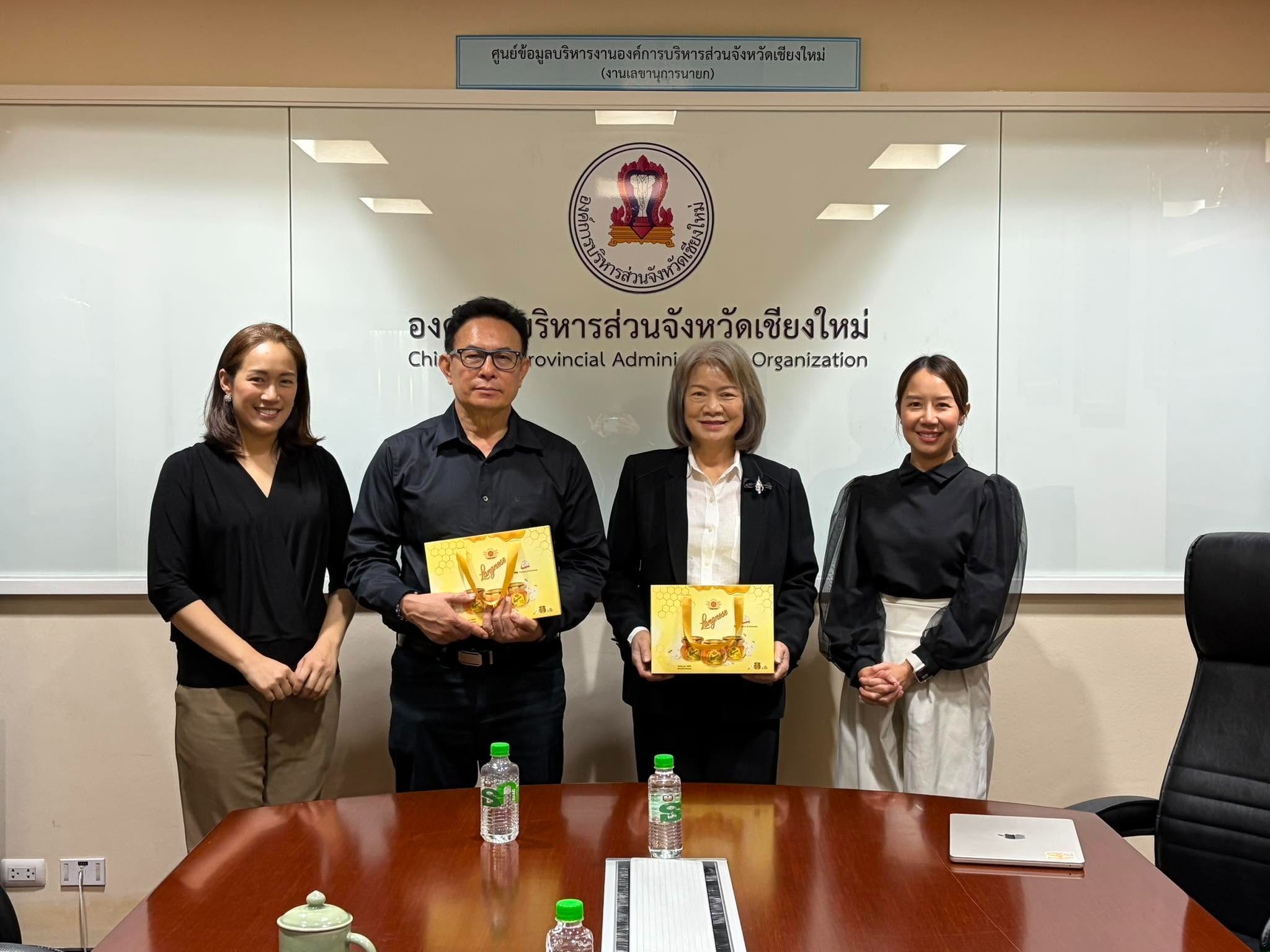
Fai meeting with officials at the Chiang Mai Provincial Administrative Organisation to discuss event planning | Photo courtesy of Bitcoin Chiang Mai
Fai went on to share that many of the wealthy and even some of the politicians in the country already understand and even own bitcoin.
She and Kostro are now working to help facilitate a situation in which those of lower socioeconomic status in the country can begin to better understand and perhaps save in bitcoin, as well.
The Legality of Bitcoin Use in Thailand
Saving is the predominant use case for bitcoin in Thailand, and the Thai government has never had an issue with people using bitcoin in such a manner.
This is according to Piriya Sambandaraksa, Thailand’s most long-standing and well-known Bitcoin educator and the founder and CEO of Right Shift (mentioned in Part II).
In a recent interview that Fedi conducted with Sambandaraksa, he shared that not only has the Thai government never pushed back on people saving in bitcoin, but it’s even been relatively lenient with people using it.
“I don’t think Bitcoin has been seen as taboo in Thailand ever,” said Sambandaraksa.
“I don’t know if that has anything to do with all of the Bitcoin education [we’ve done], because we did start early. In general, when the government has come out with regulations for Bitcoin and cryptocurrencies, they have been as lenient as they can be [...] to let people use bitcoin or whatever they want to use [it],” he added.
According to Kostro, bitcoin use in Thailand exists in a “gray area.”
“If someone wants to transact in bitcoin peer-to-peer, it’s okay,” said Kostro. “The law allows this behavior, but you're not allowed to plaster ‘We Accept Bitcoin’ stickers on the wall of a restaurant because that starts to incentivise people to use bitcoin as opposed to Thai Baht.”
Kostro also highlighted the fact that a happy medium exists with apps like PlebQR (which can be used as a Fedi Mini App).
PlebQR enables users to make a payment from their Lightning wallet that settles in Thai Baht over traditional digital payment rails (e.g., PromptPay) in Thailand. It’s like the Thai version of Kenya’s Tando, which is also available as a Fedi Mini App (just sayin’!).
“You can come to Thailand without fiat and pay for everything you need with PlebQR,” said Kostro.
Fai added that you can accept Bitcoin as a merchant in Thailand so long as you still accept Thai Baht.
In regard to engaging with the local government regarding Bitcoin use, Fai only had good things to say.
“It’s actually been very encouraging to work with the government,” shared Fai. “We’ve found that many government leaders are genuinely interested in technology and innovation.”
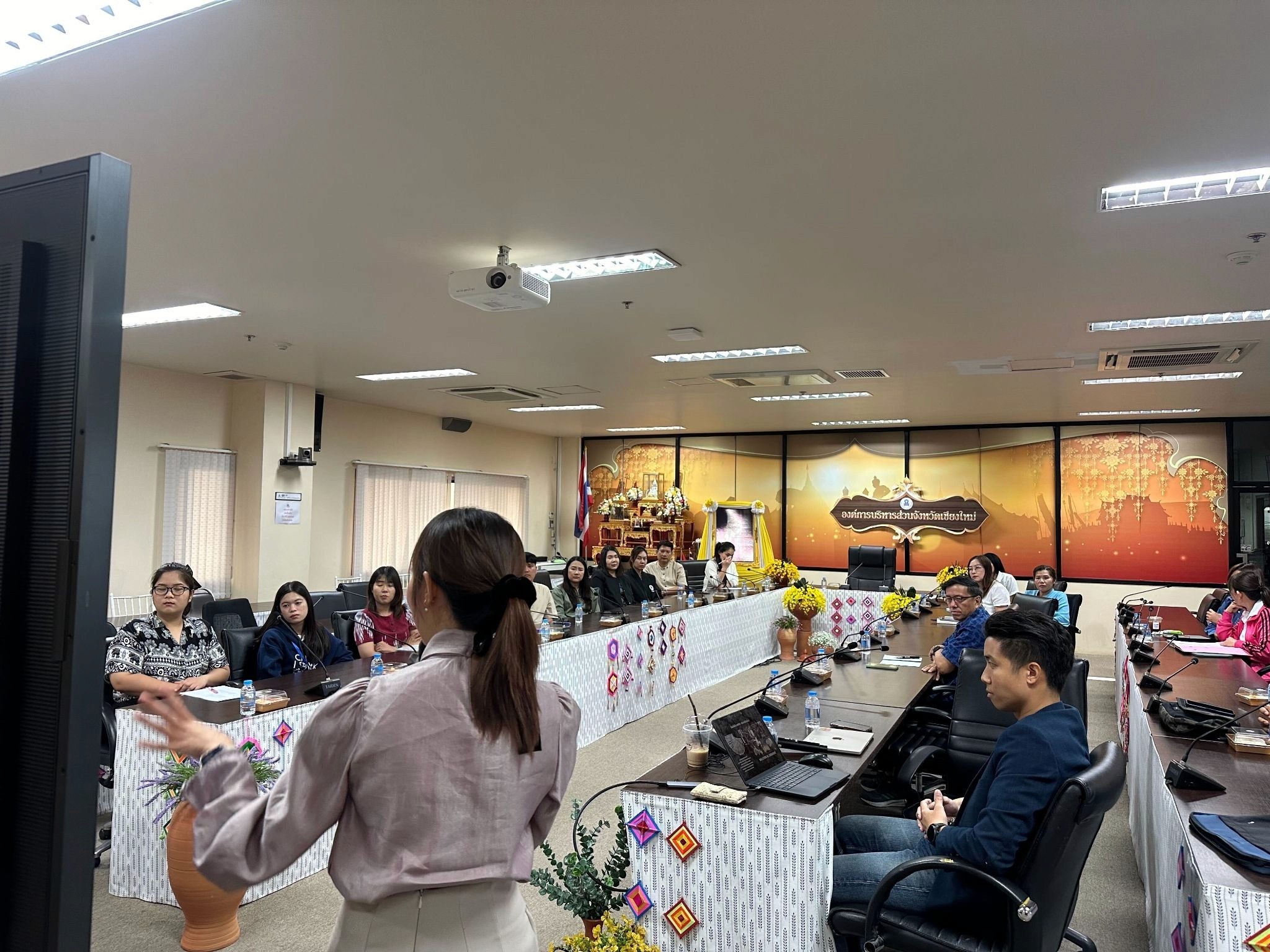
Fai presenting on the history of money at Chiang Mai Provincial Administrative Organisation | Photo courtesy of Bitcoin Chiang Mai
When she and Kostro were introduced to the mayor of Chiang Mai, they were pleasantly surprised to learn that he was already familiar with the technology and is a proponent of it.
“The Thai government looks at the Bitcoin Learning Center like a think tank, and they are happy to have us work with them and to educate government officers, too.”
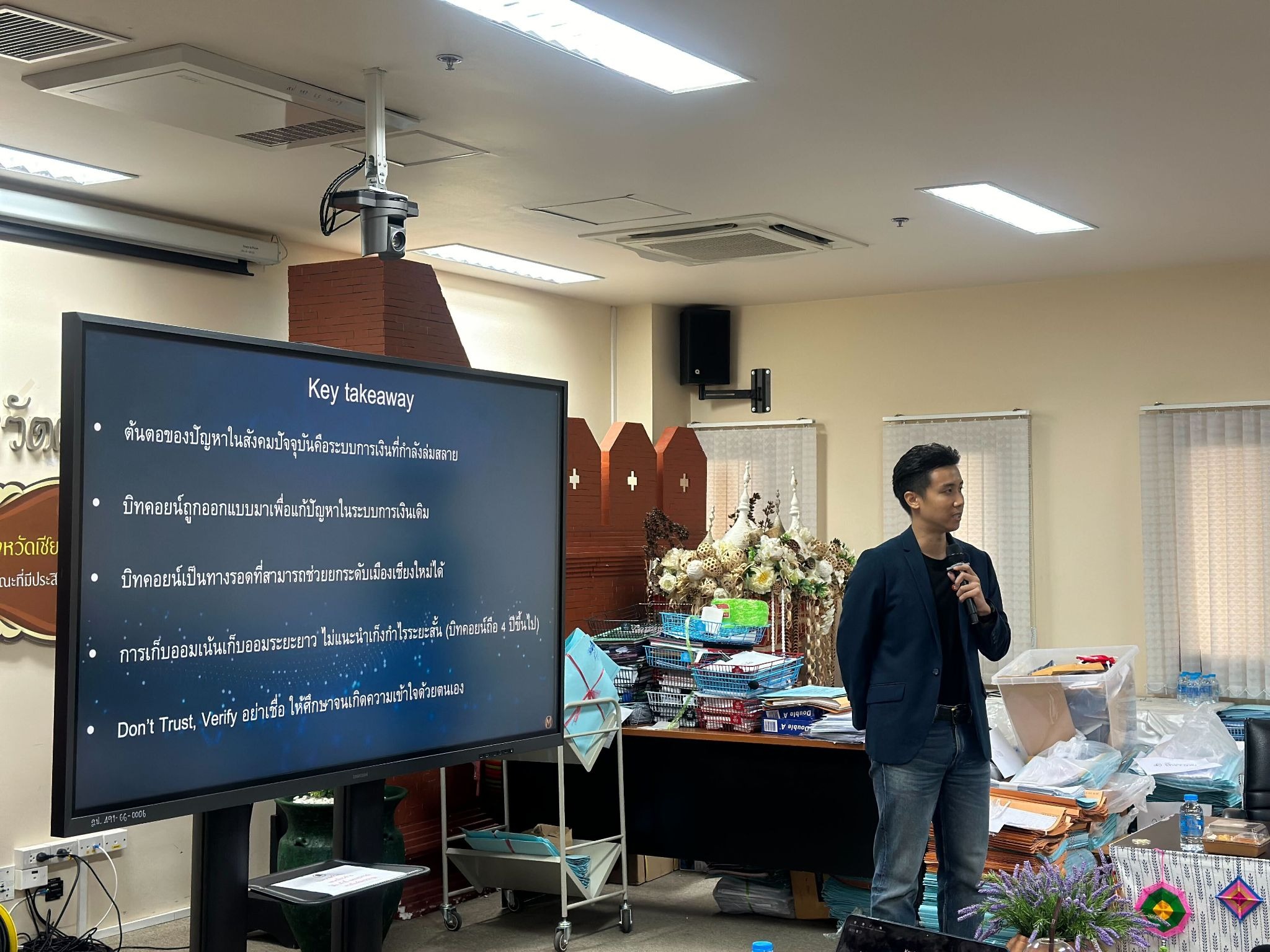
Mon Chartrawee, a Bitcoin Chiang Mai associate, giving a presentation entitled “How Bitcoin Can Help the City” at a meeting with Chiang Mai Provincial Administrative Organisation | Photo courtesy of Bitcoin Chiang Mai
Now, you may be asking yourself: How did Fai and Kostro first start making connections with government officials?
It’s a good question, and the answer is quite simple: By putting on long-distance running events, of course.
Organising Bitcoin-Themed Races Opens the Door for Discussions with Politicians
One of the other major endeavors of the Bitcoin Learning Center is Run For Freedom.
Kostro, an endurance runner himself, saw a parallel between long-distance running and Bitcoin, outlined in the screenshot from the Run for Freedom website (below).
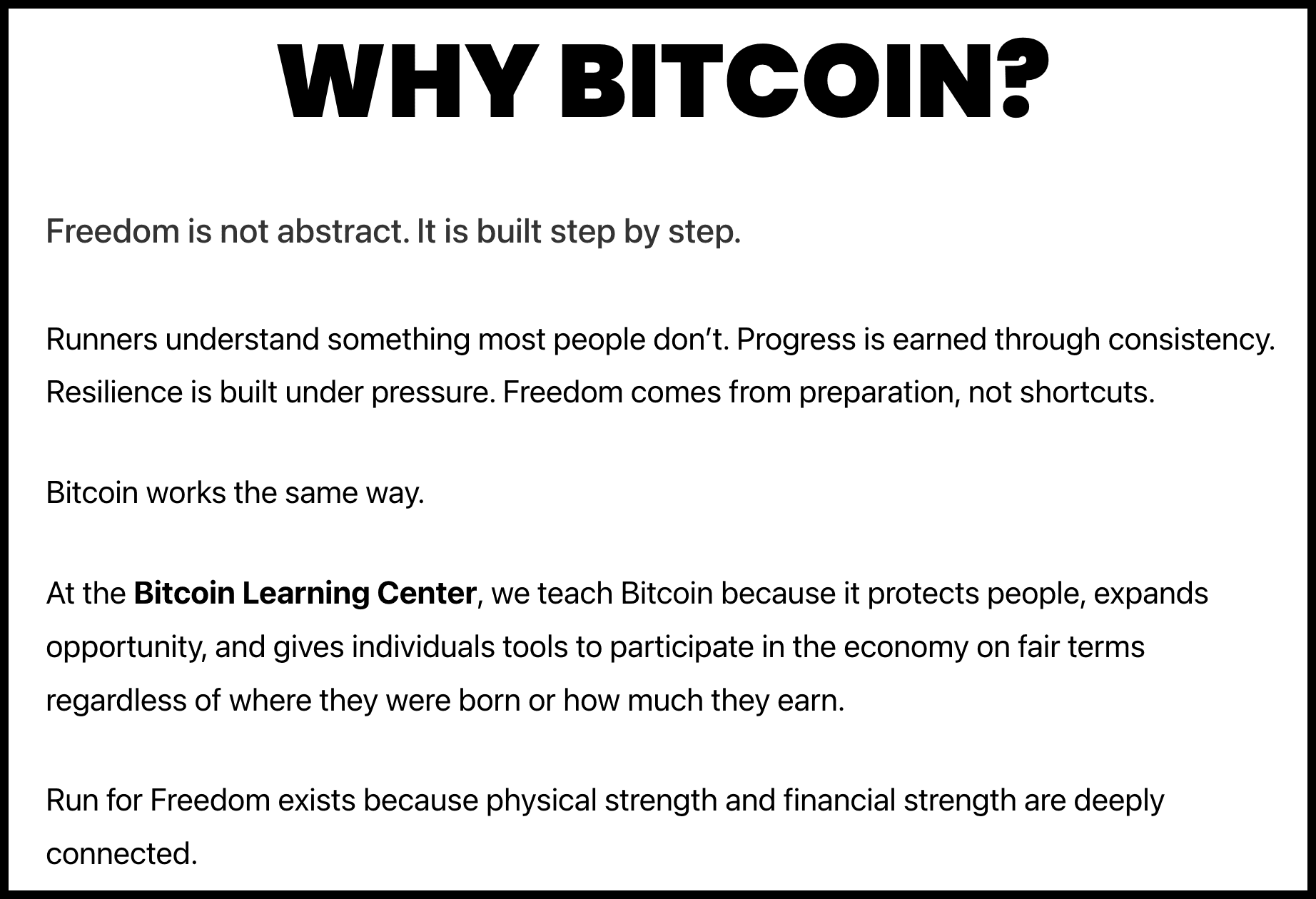
The philosophy of how running and Bitcoin have commonalities from the “Why Bitcoin?” section of the Run for Freedom website
And so, two years ago, he began setting up races within and just outside of Chiang Mai.
Said races include trail races as long as 50km as well as half marathons and marathons in which runners traverse the streets of Chiang Mai.

A photo from the 2025 Bitcoin Half Marathon, hosted by Bitcoin Chiang Mai | Photo courtesy of Bitcoin Chiang Mai
For the runners to do this, Kostro and the race organisation team needed permits.
“As we were going through the planning process with the local administrators, we’d submit paperwork recognising zoning regulations and requesting road closures, and at the end of the meetings the administrators would always ask, “So, what is Bitcoin?,” explained Kostro. “That’s when we’d say, “Well, please pull up a chair…”

A photo from the 2025 Bitcoin Trail Run, one of the many types of running events Bitcoin Chiang Mai hosts | Photo courtesy of Bitcoin Chiang Mai
A conversation about Bitcoin would ensue, which led to more and more conversations with higher and higher-ranking public officials.
What helped Fai and Kostro win the trust of those with whom they spoke within the government was the presence of the physical centre itself.
“When you have a renovated and well-taken-care-of building like the learning centre, the government officials know that they have a place to go to hold people accountable,” explained Kostro. “It gives us credibility. Plus, everyone now knows that we’re generous with our time. This has helped us to establish good relationships with these officials.”
Fai added that her status as a university professor also very much helps.
“Thai society respects university professors,” she said.
“They believe that we invest in ourselves a lot, and when someone from the government learns that I’ve been a professor for seven years, they welcome me,” she added.
“They know how hard I work both inside the classroom and in the community, and this is why they’re willing to work with us.”
Moving to the Next Level
While Fai, Kostro, and the team at the Bitcoin Learning Center have accomplished much in just four years, they don’t seem to be slowing down any time soon.
Fai is eager to strengthen her skills as someone influencing policy. She’s currently working with two PhD candidates who have expressed interest in starting an official Bitcoin policy centre as a division of the Bitcoin Learning Center and has been preparing to connect with the Bitcoin Policy Institute in the U.S. for guidance.
At the same time, she and Jimmy continue to refine their curriculum to adjust to the needs of a changing Bitcoin ecosystem.
On 1 August, Bitcoin Chiang Mai issued a statement in which they shared that their curriculum will focus on multisignature self-custody in response to the Coldcard wallet hack.
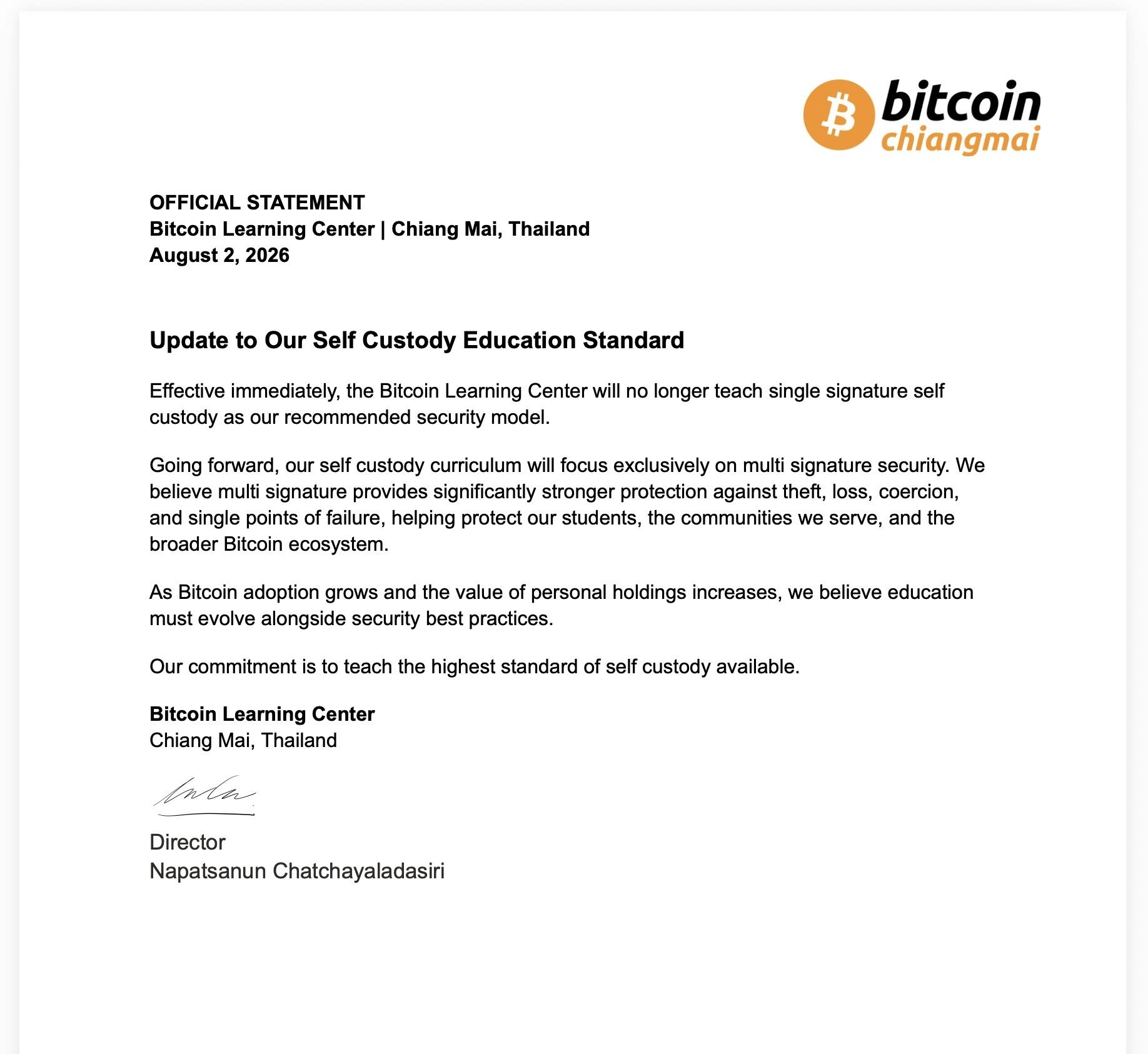
This letter was shared via an X post from Kostro
And just two weeks earlier, Kostro informed me that the centre had signed its first media client, which occurred right around the time that the Bitcoin Chiang Mai YouTube channel reached one million views.

They’ll be helping a company with its content production, editing, publishing, and content strategy under a new official division of the centre called BLC Media.
“With the building, equipment, experience, proof of work, and an established three-person media team already in place, we can scale this efficiently,” Kostro told me via text. “To support the additional workload and maintain quality, we are now adding a fourth member to the media team.”
This latter development regarding the centre bringing in a paying client for its media services seems particularly well-deserved, especially for an institution that believes its real ROI should be measured in the number of people it reaches.
According to Kostro, though, having paying clients does not alter the calculus or the mission of the Bitcoin Learning Center in the slightest. It’s simply an indicator that the centre is moving on to the next level.
“What changes most is that our team can now see the value of their work reaching far beyond our own walls and into the broader community, and they should be incredibly proud of that,” said Kostro.
“Reaching more than a million people proved that when you spend years building something with everything you have, you develop real strengths along the way,” he added.
“Building a profitable local media company from everything we’ve learned doesn’t feel like starting something new — it feels like the natural next chapter of everything we worked so hard to build thus far.”
