April 29, 2026
Community Spotlight: Bitcoin Dua
“When I started Bitcoin Dua, I never imagined it would reach the height it has.”
This is what Mawufemor Kofi Folivi (who goes by “Kofi”), founder of the Ghanaian Bitcoin circular economy Bitcoin Dua, told me in a recent interview.
Kofi, who has been a community organiser for over 20 years in Agbozume, the village in which Bitcoin Dua is based, was simply looking to use Bitcoin as a tool to help augment his work.
“I just thought that, with Bitcoin, we could maybe maybe financially beef up what we'd been doing with the young people already, and then maybe help them make a living out of what they were getting from us in terms of skills training,” said Kofi.
Bitcoin has done this and more — much more — for the members of the Bitcoin Dua community, which is hard to imagine given that Kofi wasn’t even aware of Bitcoin less than four years ago.
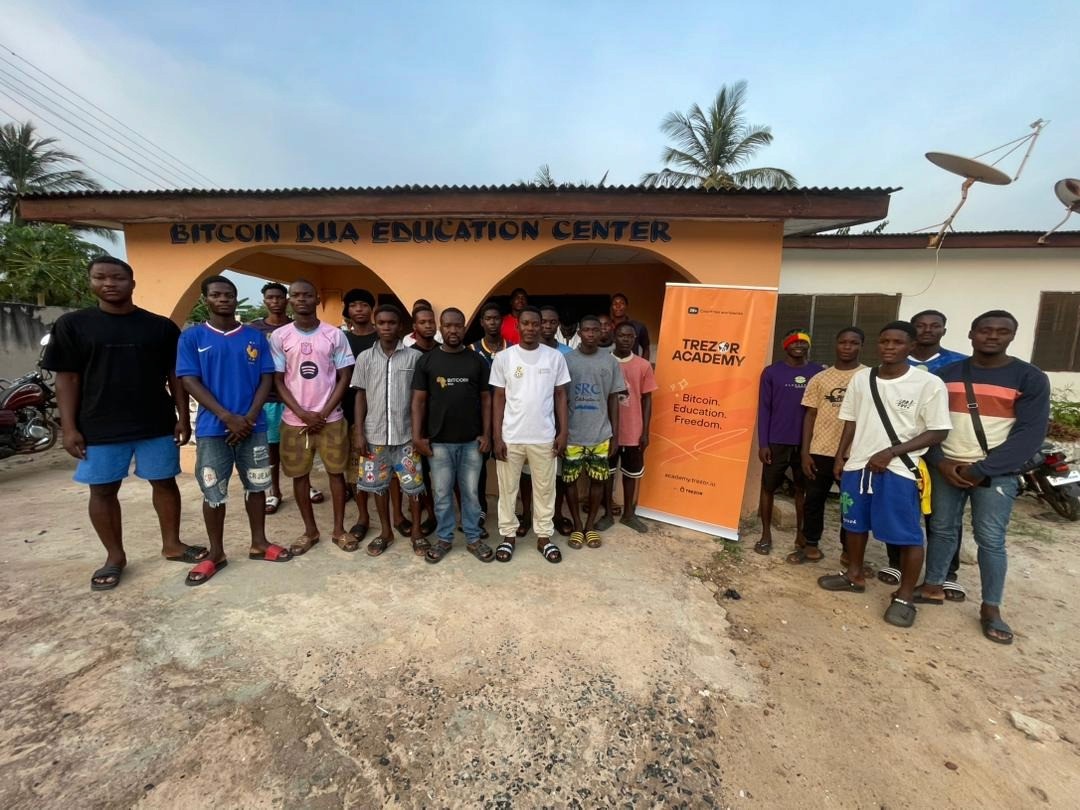
Kofi, in the center in the black Bitcoin Dua T-shirt, with community members outside the Bitcoin Dua education center. | Photo credit: Bitcoin Dua
Discovering Bitcoin
It was in December 2022 that a friend of Kofi’s invited him to attend the inaugural Africa Bitcoin Conference, which took place in Ghana that year.
Without thinking too much about it, Kofi accompanied his friend to the conference with an open mind.
Not only did it open his eyes to the potential of Bitcoin, but, at the conference, he found a new mentor — Hermann Vivier, founder of Bitcoin Ekasi.
Vivier shared with Kofi key aspects of his strategy for setting up and developing a Bitcoin circular economy. Technical education was at the core of said strategy, and this was an area with which Kofi had experience.
“The Africa Bitcoin Conference in 2022 was the turning point for us,” said Kofi.
Up until early 2022, Kofi and his team had been utilizing a local government facility as a place to teach the youth in Agobzume about information technology (IT).
Unfortunately, they lost access to that facility when new leadership in the local government informed him he was no longer able to use the facility.
When Kofi returned home from the conference, though, he was determined to reopen a learning center, and began to renovate a humble, one-story building he’d acquired some years back.
By late 2023, Kofi and his team had renovated the building and the Bitcoin Dua learning center was founded.
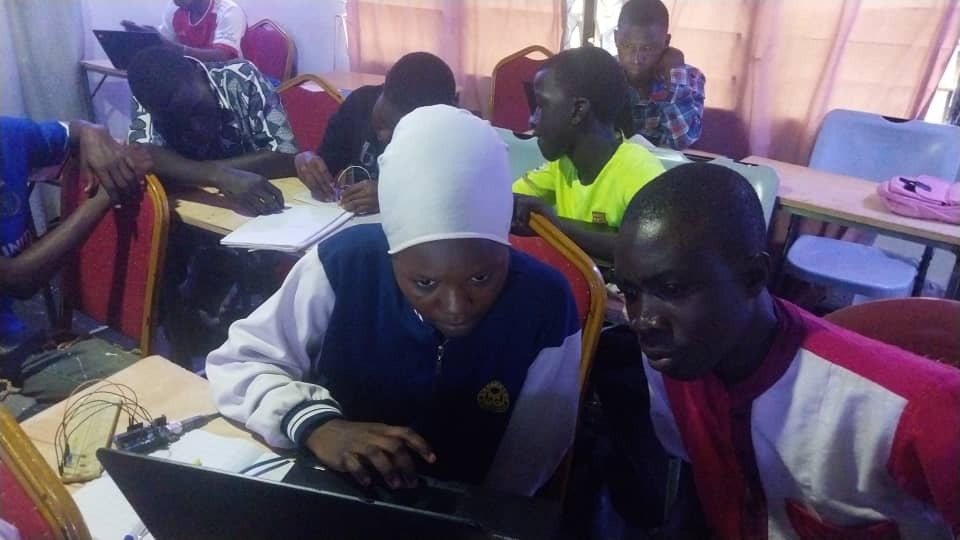
Students working together in a coding class at the Bitcoin Dua education center. | Photo credit: Bitcoin Dua
Now, the center is technologically equipped to teach almost two dozen local youths at a time.
“We now have more than 20 laptops that the kids use to learn about Bitcoin and to train on to learn how to code,” said Kofi.
Open-Source Education
Education is at the core of Bitcoin Dua’s mission.
And this education doesn’t stop at teaching people what Bitcoin is and how to use it. It’s also a means to equip the youth in Agbozume with skills that will help them to find technical work, which they can earn bitcoin for.
Because he wants opportunities for every member of his community, he’s modeled Bitcoin Dua’s educational policy after Bitcoin itself — education in Bitcoin Dua is permissionless and open to all.
“We like to say that the education we offer is open-source,” explained Kofi. “A young person can walk into the center, and without asking that young person who their parents are or where they live, we simply begin to tutor them. We do not put any hurdles at all in front of them.”
Kofi said that this has fostered an environment in which not only have many come to learn, but one in which those who initially came to learn are now the teachers.
“We are gradually achieving what we wanted to achieve by training the people in our community and having those people train the next wave of learners,” said Kofi. “We’ll keep doing this until we’ve made our community a hub for tech. We want our community members to earn a living in bitcoin from their technical skills right where they are, without even traveling outside of our community.”
And if Agbozume residents begin earning in bitcoin, they’ll need to spend it, too.
This is where Bitcoin Dua’s merchant onboarding efforts come in.
Merchant Onboarding
The Bitcoin Dua team has now onboarded 30 merchants to Bitcoin, and this onboarding of merchants has been a steady and organic process.
At first, many of the merchants were skeptical of Bitcoin. Most saw the new form of money as little more than a scam.
However, they’ve gradually become more comfortable with it.
This is in large part thanks to the trust that Kofi has earned among the members of his community.
“In our community now, Bitcoin has become an everyday word,” began Kofi.
“Whenever people see me now, they say, ‘Hey, Mr. Bitcoin’! Because of my reputation in the community and how I relate with everyone, they see it to be a trusted money that they can deal with,” he added.
“If it was a scam they know I wouldn't be associated with it, because I've never done anything in the community that a community can ascribe to being fake or deceiving.”
The Bitcoin Dua Sports Complex
The work of Kofi and his team hasn’t only been recognised by the residents of Agbozume but by the broader world, as well.
At the 2024 Africa Bitcoin Conference, he and the Bitcoin Dua team won the Social Impact Award, which earned them 0.15 bitcoin for Bitcoin Dua.
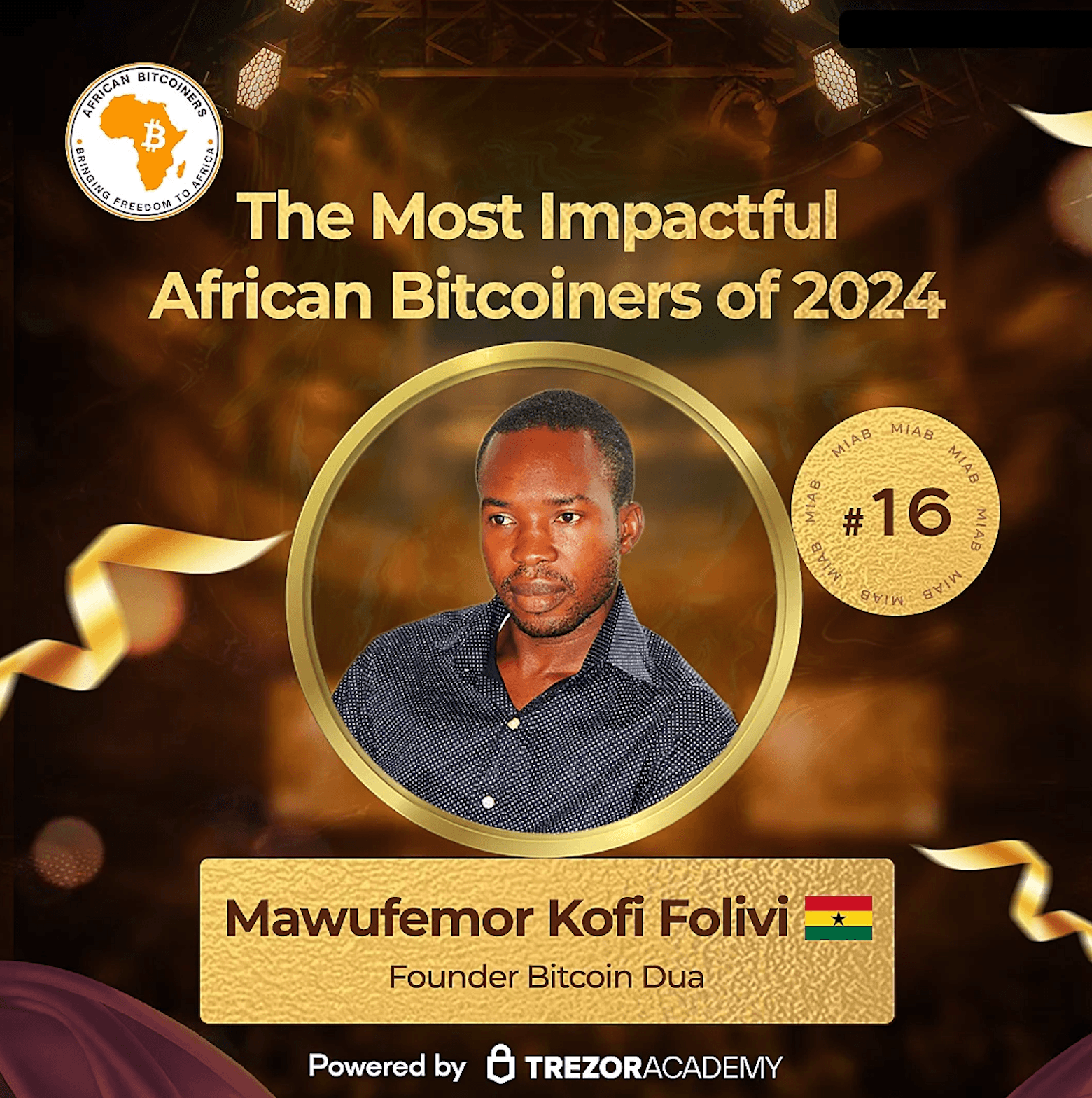
Kofi was voted as one of the most impactful African Bitcoiners in 2024.
Soon after, Bitcoin Dua won a discovery grant from Jack Dorsey’s Block to build a sports complex. Block dispersed $50,000 worth of bitcoin in November 2024 and $100,000 worth of bitcoin in August 2025 for the project.
Kofi said that the sports complex will be a safe place for Agbozume’s youth to play, grow, and learn together. It will also be a place where community members can learn about and spend Bitcoin while attending events.
“The Bitcoin Dua Sports Complex isn’t just about sports, it’s about creating a place where energy, hope, and opportunity meet,” Kofi told Forbes in a recent interview.
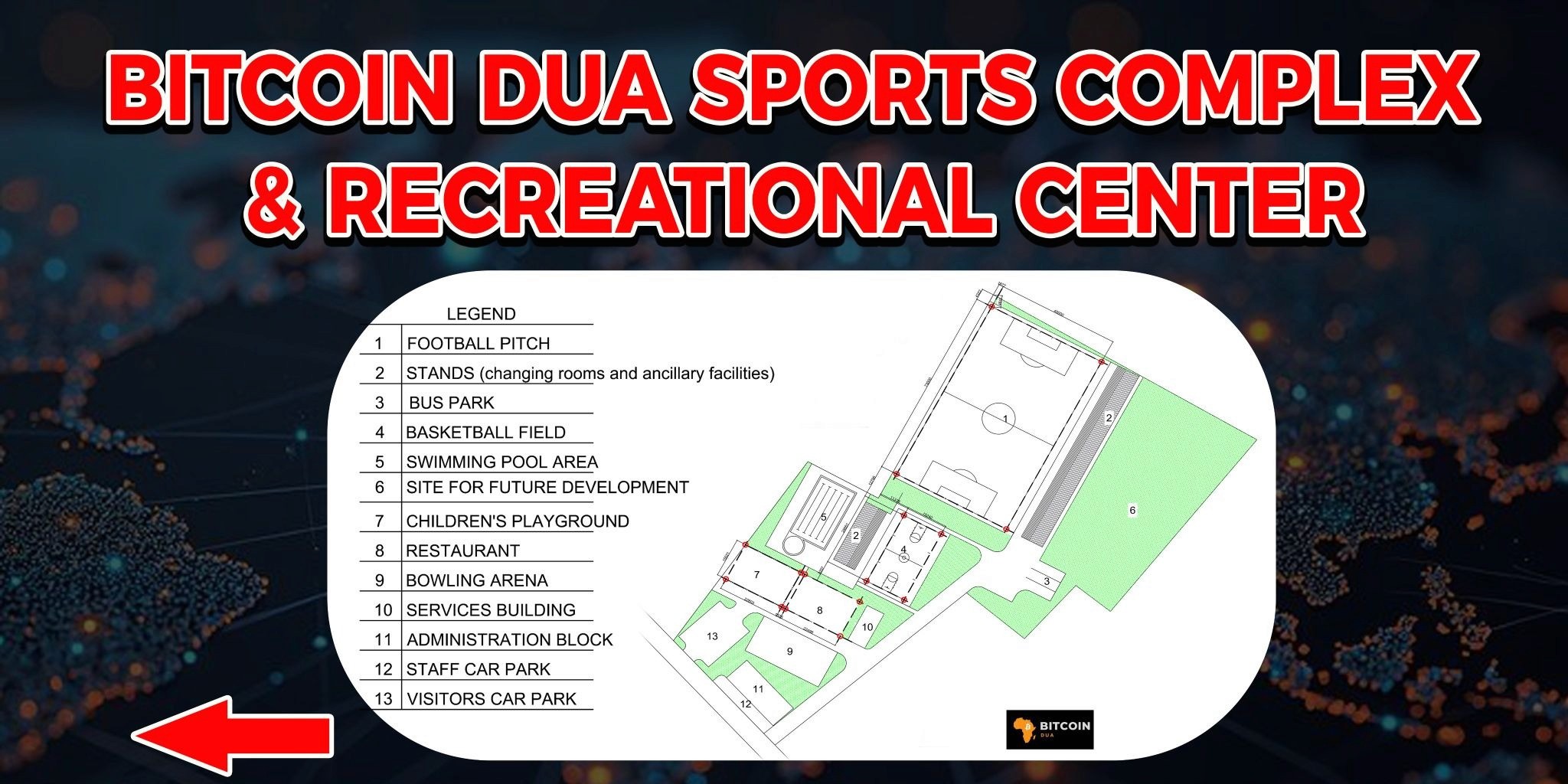
An overview of the Bitcoin Dua sports complex. | Image credit: Bitcoin Dua
The local government, which noticed Bitcoin Dua’s coverage via various international media outlets, has also come to the aid of Kofi and his team, as it’s working to build roads to help people more easily get to the new sports complex.
There are the sorts of “new heights” that Kofi wasn’t quite expecting to reach.
Onboarding Football Players with Fedi
Kofi also mentioned that Fedi has become a go-to onboarding tool for some of the football players that will compete at the new stadium.
“We’ve decided to use the Fedi app for the football club members we teach about Bitcoin,” said Kofi.
Kofi says that they use Fedi to create Communities within the app for the football teams, but that it was the mix of communication and transactional capabilities that really attracted the attention of the players.
“With Fedi, we reward players with sats on the same platform we use to communicate,” explained Kofi.
“This is something that the players have a lot of interest in, but, initially, they said ‘How could that be possible? How can you just send someone bitcoin in a message in the same app?’ he added with a bit of a laugh.
What’s Next for Bitcoin Dua?
Within the coming years, Kofi aims to increase the human capital in Agbozume to a point in which many of the technical solutions in the community come from within it.
“In our two- or three-year vision, we want to see our training center turn out high-quality human resources that should be able to technically solve our community problems so that we don’t have to look outside the community for solutions,” said Kofi.
“If you look at Uber or Bolt (an African ride-share app), they don’t operate in our community probably because they don’t see a market for it,” he added.
“We should be training people to create our own local services like this.”
He highlighted the world of Bright Kportiklah, creator of the Lightning-to-fiat payment app BitSpenda, which recently became a Fedi Mini App.
“Bright is paving the way for the rest of our community,” said Kofi.
While Bright is currently studying in Accra, Kofi hopes he’ll one day return home to work out of the new facility he plans to build, a facility out of which all of the community members that Bitcoin Dua trains can work.
Kofi feels that this is the true key to not only nurturing talent in Agbozume but keeping it there.
“We are looking at having a facility that would house all the tech hubs that will come up after we train people here,” explained Kofi.
“That will actually be the turning point,” he added.
“We’ll help them develop commercially-relevant skills, and then provide them with a space from which they can put those skills to work in collaboration with companies and institutions from all over the world.”
Kofi’s vision seems almost too grand, until you realise that he’s viewing the future from atop the perch of the great heights to which he’s already guided his community.
