
May 13, 2026
Country Spotlight: Ecuador
Toward the end of last month, Fedi partnered with JJ Chagerben — Ecuadorian author, Bitcoin educator, and renowned Tiktoker — to participate in two mini-conferences in Ecuador.
Held on 25 April in Quito, Ecuador’s capital, and on 28 April in the coastal city of Guayaquil, the attendees at the events, particularly the entrepreneurs in attendance, showed strong interest in Bitcoin.
“JJ’s audience skews heavily entrepreneurial,” wrote Fedi Latin America Community Master Lorena Ortiz in a field report on the events. “The most active and engaged attendees at these events tended to be entrepreneurs, and they showed the clearest interest in tools within Fedi such as Mini Apps like BTC Map, which they can use for their businesses.”

A screenshot of one of Chagerben’s TikTok’s, which features Fedi’s Ortiz.
It’s hardly surprising that Chagerben attracts a highly-motivated, business-savvy audience as he, too, is this type of person.
And it was Bitcoin that catalyzed him to leave his former career in an effort to make a name for himself as a Bitcoin educator.
Chagerben’s Bitcoin Mission
It wasn’t long ago that Chagerben was still working as an oil engineer at Petroecuador, Ecuador’s national, state-owned oil company.
While he first learned about Bitcoin in 2017, it wasn’t until a few years later that he started teaching people about it.
“I’ve been helping people learn about Bitcoin since 2020,” Chagerben told me in an interview.
Soon after, Chagerben went out on his own as a Bitcoin educator and influencer.

A screenshot of one of Chagerben’s TikToks from his office
And, as he did so, his mission was clear:
“[I wanted to] get [my audience] to open their eyes to the Platonic cave they live in,” said Chagerben.
He went on to share that many Ecuadorians struggle to see past the notion of money being a physical object and that many still believe the U.S. dollar, the official currency of Ecuador, is still their best monetary option, even though it continues to lose value.
Chagerben shared that part of his work is showing his audience that “Bitcoin shatters the framework” that they’re familiar with.
In Chagerben’s 2025 book, Invertir en Bitcoin o Escalvitud (Invest in Bitcoin or Slavery), he offers financial tips around earning money and highlights certain virtues that not only lead to people having discretionary funds to invest in bitcoin, but that generally make them “better people,” as he put it.
“I talk about virtues, because to make money, you have to be a virtuous person, someone with patience, prudence, discipline,” explained Chagerben.
By adopting a combination of these virtues and Bitcoin itself, Chagerben hopes that Ecuadorians can break the “chain of poverty” in the country.
Why Bitcoin Matters in Ecuador
On 8 March 1999, just one hour before banks were supposed to open, Ecuador’s superintendent of banking announced a surprise, one-week bank holiday during which Ecuadorians could not withdraw funds from their accounts.
Chagerben noted that the Bank Holiday of 1999, which was a partial cause for the Ecuadorian government’s declaration of a state of emergency, was the most serious financial crisis in Ecuador’s modern history.
“It forcibly triggered the migration of millions of people and, in turn, the abandonment of our currency in favor of the dollar,” recounted Chagerben.
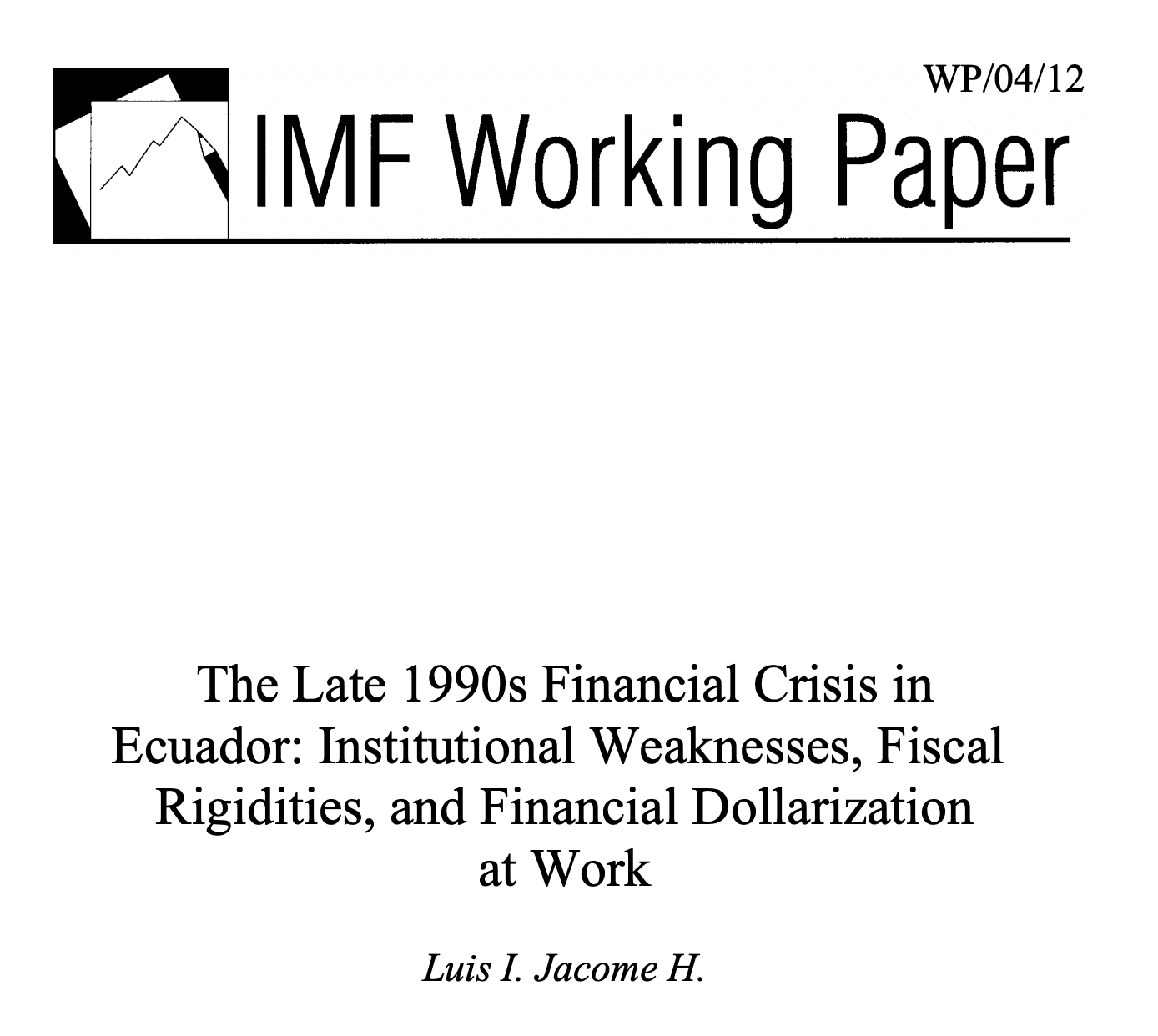
The cover page for an IMF working paper on the 1999 banking crisis in Ecuador | Source: IMF
Bank runs and bank failures ensued for months after the bank holiday, and the desperation in the country led to not only the migration that Chagerben mentioned, but protests, looting, and rioting.
It wasn’t until November 1999 when the Constitutional Tribunal in the country declared the account freezes unconstitutional that the deeply traumatic period of Ecuador’s history began to subside.
While Chagerben didn’t say so explicitly, I got the impression that this event is still relatively fresh in the minds of those who lived through it.
With this in mind, it’s easy to understand why Chagerben went on to say that Ecuadorians very much value the fact that Bitcoin enables them to maintain control over their money in a self-sovereign way.
What Ecuadorians Value about Fedi
Ecuadorians tend to not only value the ability to control their money with bitcoin, but also the ability to use it privately.
This was one of many takeaways Ortiz noted after teaching Chagerben’s followers about Fedi at the two events in the country last month.
“Privacy resonated strongly,” wrote Ortiz, who explained the privacy that Fedi offers as she onboarded the attendees to Chagerben’s federation. “And the practical use case around value transfer is what really clicked.”
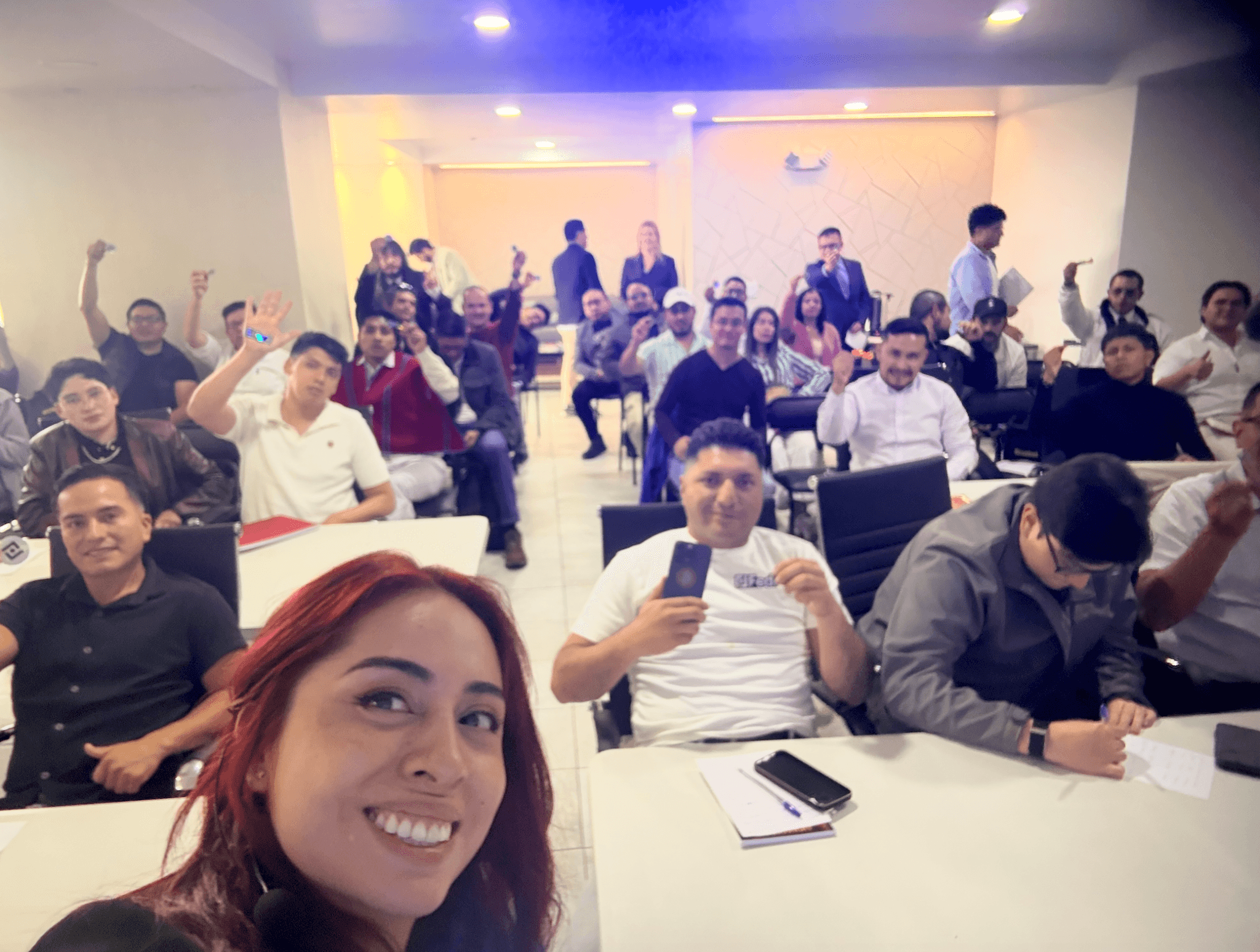
Lorena Ortiz taking a selfie with the attendees at a JJ Chagerben + Fedi event in Quito, Ecuador
Ortiz noted other high notes from the events included when she walked the attendees through how to list their business via the BTC Map Mini App with the Fedi ecosystem.
“The BTC Maps listing demo consistently sparked engagement, a clear signal that this audience thinks in terms of business utility,” reported Ortiz.
Chagerben added that BTC Map has been instrumental in his efforts to onboard more businesses in the country to Bitcoin.
“I am trying to grow this movement with the help of the BTC Map tool,” said Chagerben, who added that businesses tend to attract more customers once they’ve added themselves to BTC Map.
Chagerben’s Advice to Bitcoin Educators
When I asked Chagerben if he had any words of wisdom for those looking to produce Bitcoin content, he responded with just four words: “Bitcoin only — not crypto.”
Some of this attitude seems to be inspired by the fact that some of the work that Chagerben does is helping Ecuadorians unlearn what they’ve learned about Bitcoin, much of which has come from either themselves or someone they know being a victim of a Bitcoin or crypto scam.
Also, I get the sense that Chagerben views much of the broader crypto space as a scam in and of itself, which further bolsters his case for a Bitcoin-only approach.
He also recommended that those new to teaching Bitcoin educate themselves before teaching others and learn to filter out signal from noise — or what’s real versus “garbage content,” as he put it.
He also added that “talking about Bitcoin means talking about new paradigms, a parallel polis,” indicating that Chagerben doesn’t view Bitcoin as just an asset within a broken system, but an entirely new system in and of itself.
“I talk about [...] why Bitcoin is better than gold, why Bitcoin is better than real estate, and why Bitcoin is harder than all precious metals [in my book],” said Chagerben.
Spoken like a true Bitcoiner and a prominent voice within Ecuador’s Bitcoin community.
Editor’s note: Chagerben’s responses were translated from Spanish.
