June 17, 2026
Community Spotlight: Brazil’s Bitcoin Amantikir
“I’m not a Bitcoin fanatic,” Pedro Fadida, founder of Bitcoin Amantikir, told me in an interview.
“Bitcoin is a tool to help us accomplish things, not the destination,” he added.
“I’ve embraced Bitcoin because there are so many principles behind Bitcoin that can help us more deeply understand certain ways to approach life.”
Fadida only began incorporating Bitcoin and Bitcoin philosophy into his work about 20 months ago, yet both have become integral parts of his various endeavors, which include running a small posada (hotel) and holistic center called Munay, serving as a coach and educator, and hosting retreats.
He’s also established a Bitcoin circular economy in Serra da Mantiqueira in Santo Antônio do Pinhal, a touristic area with about 8,000 residents that’s located in the mountains about 100 miles outside of São Paulo.
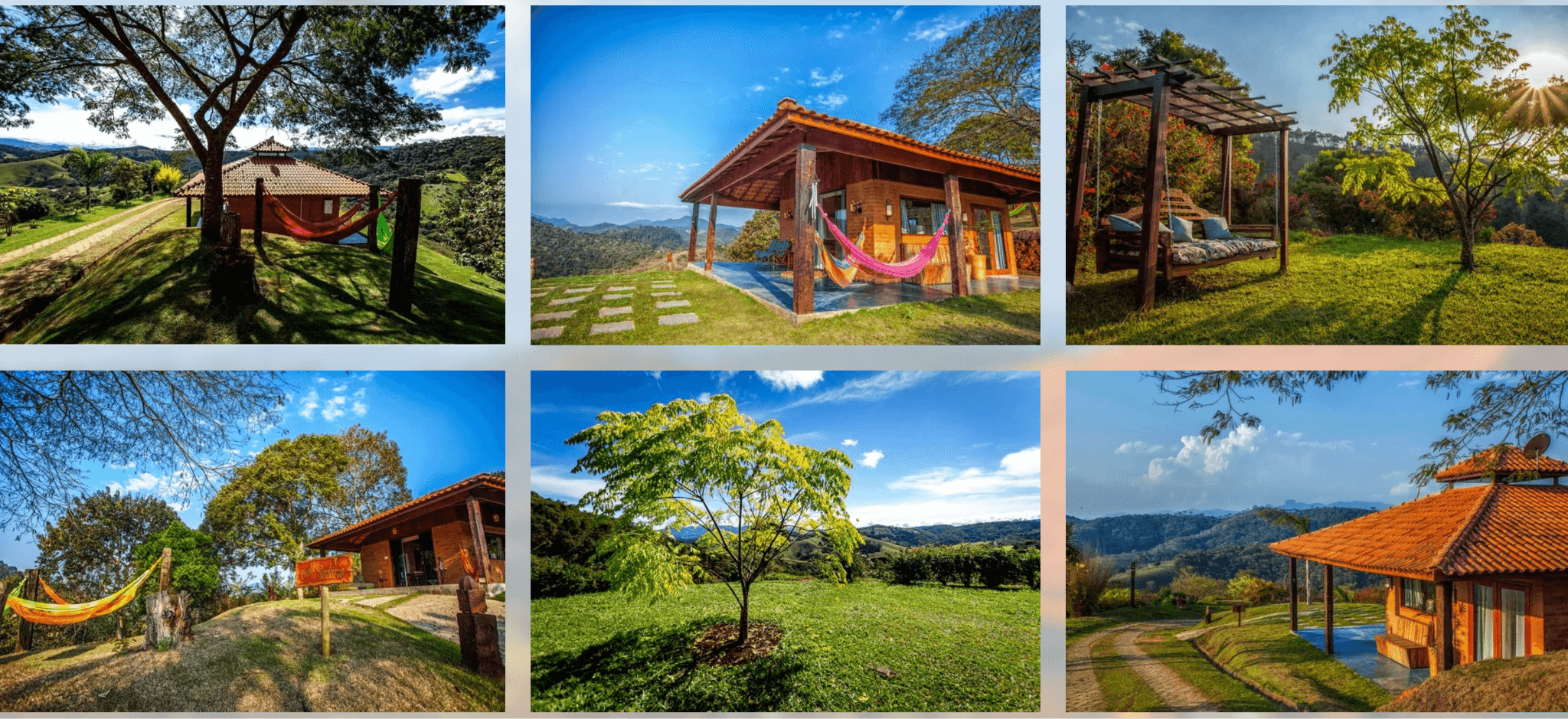
Images of Fadida’s posada, Munay, in the mountains outside of São Paulo
When he talks about why he incorporated Bitcoin into what he does and how he’s helped onboard approximately 150 merchants in the region, he does so with a certain grace and air of nonchalance, as if it were simply a logical extension of the work that he and others in the region do.
His disposition as he discusses Bitcoin adoption in the region in which he lives makes it seem as though Bitcoin is inevitable — an obvious choice once you awaken to its benefits.
But he wasn’t always so calm and composed when it came to Bitcoin.
It actually took him a few years to surrender to it and to let it “shift his mentality,” as he put it.
Embracing Bitcoin
Fadida first came across Bitcoin in 2019.
He bought some soon after learning about it and spent two years differentiating between the actual technology and the various scams associated with it.
He also alluded to the notion that he was the victim of one of those scams, but that it didn’t dissuade him from continuing to learn about Bitcoin.
“Many people were saying ‘Buy here, you're going to have more bitcoin after some time,’” said Fadida. “So, I learned the hard way, but I didn't give up. I just kept saying, ‘There's something more here.’”
By 2021, he’d started to adopt certain philosophies related to Bitcoin — notions like lowering one’s time preference and maintaining individual sovereignty — but he still dabbled in trading bitcoin versus just holding it and using it as money.
That changed a year later, though.
“In 2022, I gave up,” said Fadida. “I said ‘I’m just going to hold it, wait, and focus more on changing my mentality than when bitcoin’s price would go higher.”
This shift occurred alongside another notable one.
As the COVID-19 pandemic was ending in late 2022, Fadida moved from Campinas, in São Paulo state, to where he lives now.
“The pandemic helped me to realise it was time to transition and to connect to the earth,” said Fadida.
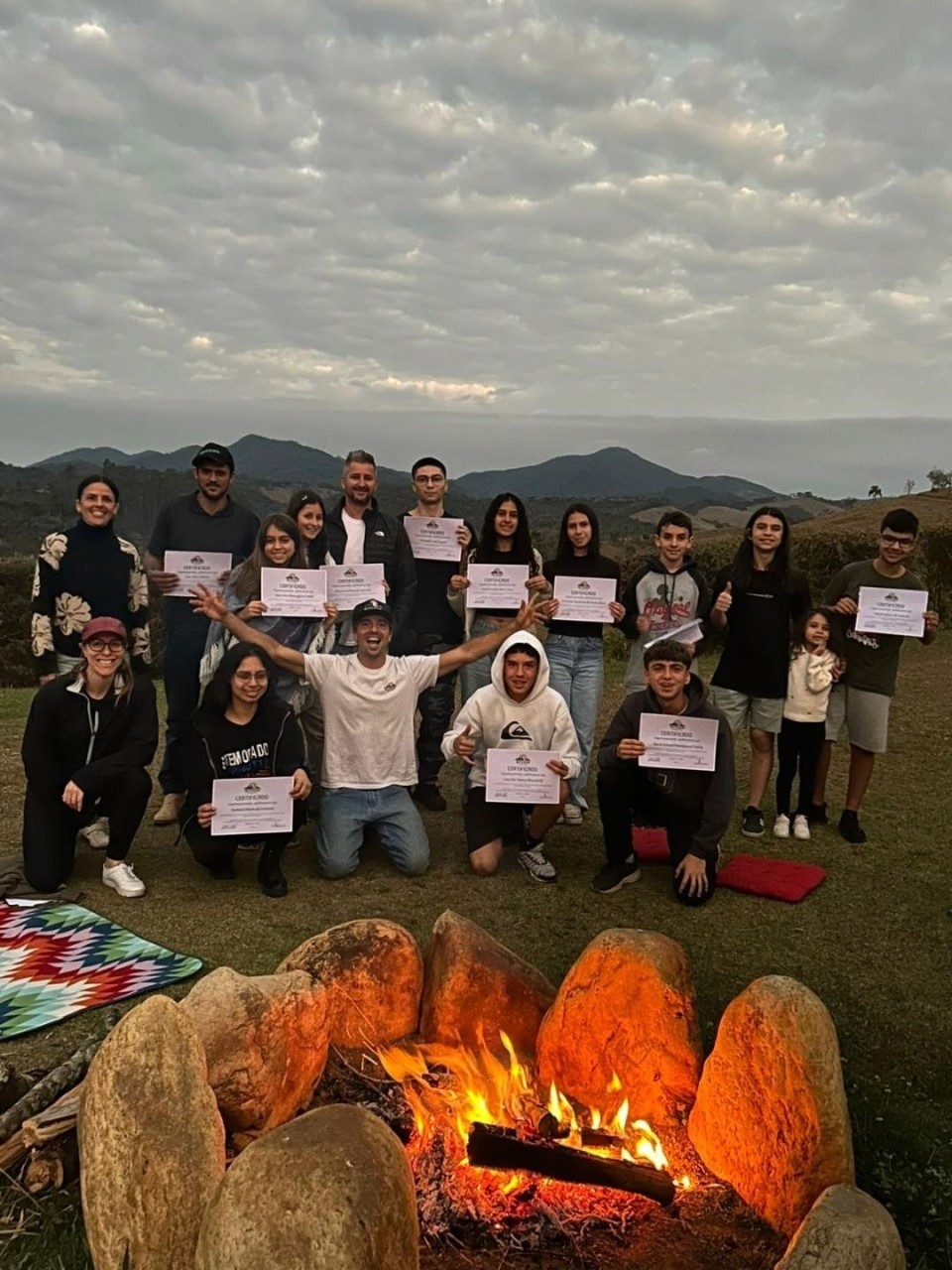
Fadida (center, in the white T-shirt) has gotten back to the earth and helps others to do the same through his retreats and educational sessions. | Photo courtesy of Pedro Fadida
A friend of his, Dione, helped him to purchase the land on which he now lives, where he not only runs Munay but also has a small farm and some space where he keeps bees.
In September 2024, Dione invited Fadida onto his podcast. During the conversation, Fadida shared his interest in Bitcoin, which Dione wasn’t familiar with at the time.
After recording the episode, Fadida began sketching his vision for a Bitcoin circular economy in Santo Antônio do Pinhal.
He proposed the idea to Dione and invited him to be a part of it.
Dione accepted the invitation and the two met with Ricardo Stim, who’d led the Bitcoin adoption effort in the southern Brazilian city of Rolante, to get a better idea of how to approach the project.
Dione, who’d been living in Santo Antônio do Pinhal for over 30 years, then used his credibility within the community to introduce Fadida to the president of the local commercial association, who quickly warmed up to the idea of permitting Bitcoin payments in the tourist town.
And so Bitcoin Amantikir was born.
Onboarding Merchants in Bitcoin Amatikir
Now, less than two years later, you can pay with bitcoin just about anywhere in Santo Antônio do Pinhal.
“You pay for almost anything with bitcoin here,” said Fadida. “You can pay at the gas station, supermarket, mechanic, etc.”
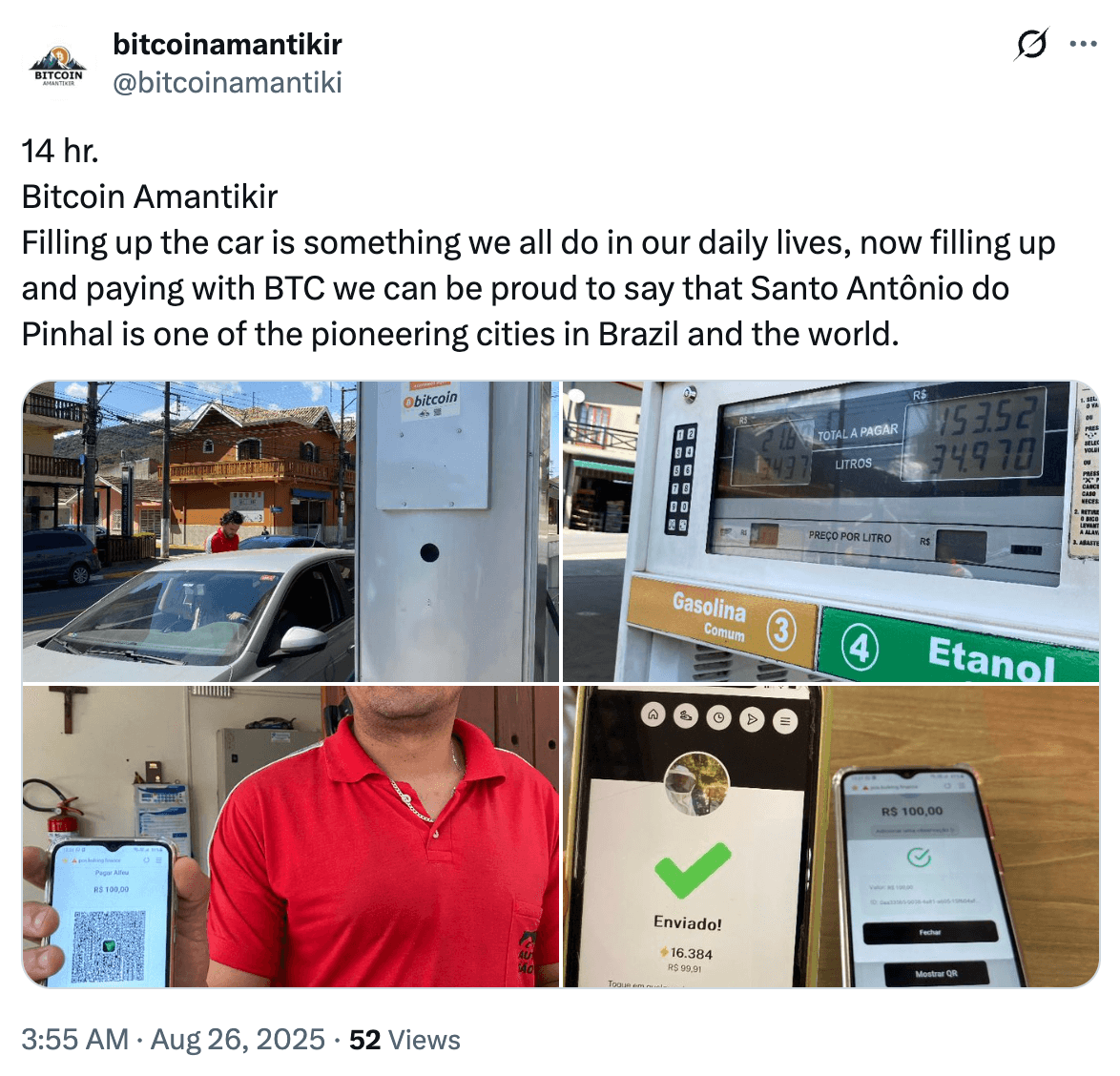
Images of someone paying for petrol in Santo Antônio do Pinhal with bitcoin | Image courtesy of Bitcoin Amantikir’s X feed
Fadida, Dione, and their three other team members have onboarded merchants from not only Santo Antônio do Pinhal but four surrounding towns, and they have plans to keep expanding Bitcoin Amantikir.
So, how have they had such rapid and notable success?
Have they led with a high-level overview of how the Bitcoin blockchain works or an in-depth presentation on the nuts and bolts of Austrian economics?
Not so much.
“They want to know how they're going to have more customers,” said Fadida of the merchants. “We tell them that there are a lot of people like us — Bitcoiners — and that we prefer to pay in bitcoin. And then we show them BTC Map and explain that people will find their shop on the map, which means they will have new customers that they may not have had before.”
In taking such an approach, the Bitcoin Amantikir induced some FOMO.
When merchants see other merchants accepting Bitcoin, they tend to start accepting it, as well, because they don’t want to miss out on an opportunity, according to Fadida, who also noted that he and his team continue to educate merchants through in-person meetings and WhatsApp groups after they’ve onboarded them.
How Fadida Integrates Bitcoin
Outside of onboarding merchants, Fadida has incorporated Bitcoin into his own business strategy.
Not only does he accept it from guests who stay at his posada, but integrates it into his educational efforts.
He often hosts groups of youths to whom he teaches self-development and financial education.
“We don’t say it’s just a Bitcoin course,” explained Fadida. “But inside the curriculum there are four Bitcoin classes that fit in with classes on topics such as self-empowerment and entrepreneurship.”
Recently, Fadida has begun employing the “Bitcoin for Juniors” programme from My First Bitcoin for classes he teaches for children ranging from 8 to 12 years of age.
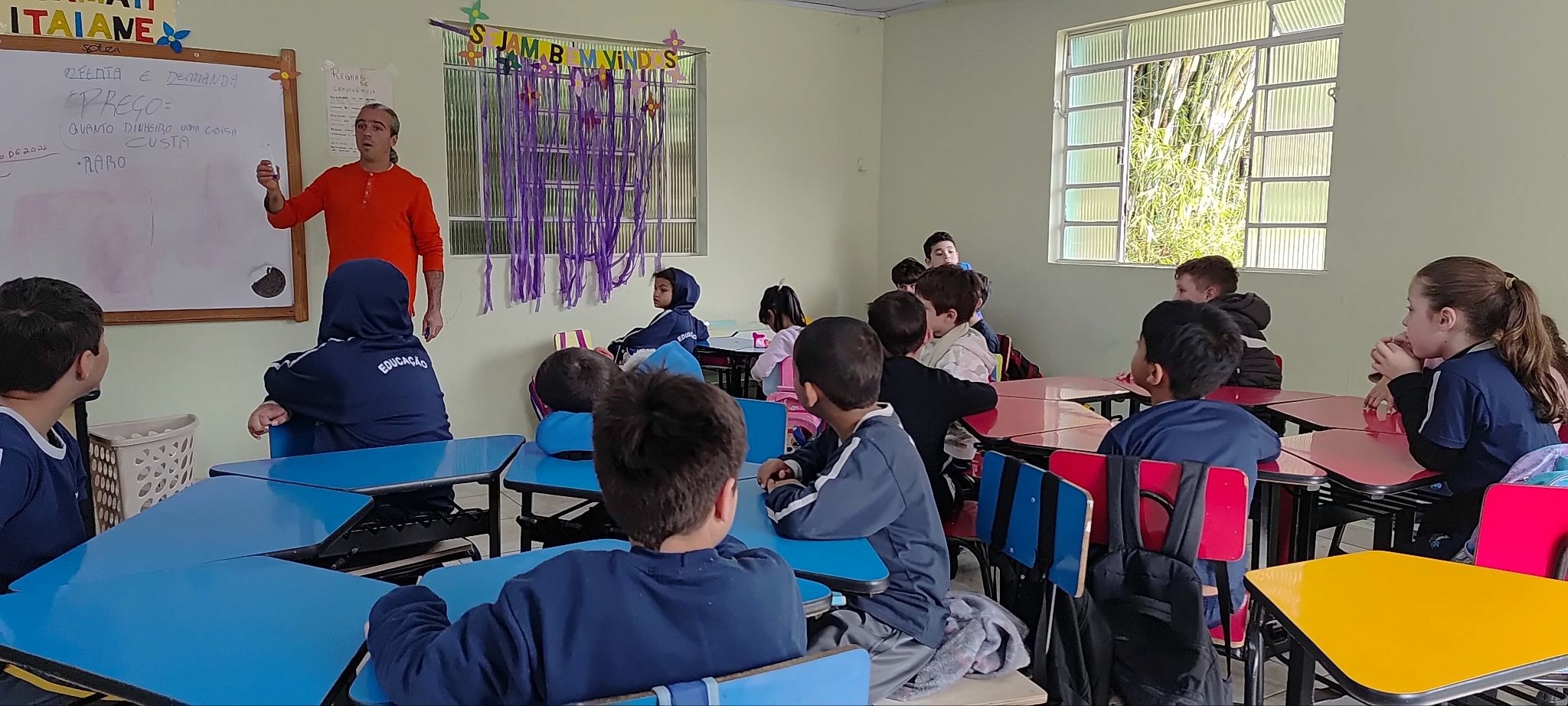
Fadida teaching children about Bitcoin | Photo courtesy of Pedro Fadida
These courses happen via an NGO called Aquarela, which operates in Santo Antônio do Pinhal.
Fadida also teaches the youths about permaculture and how to survive in nature, the latter of which is an activity he believes is aligned with Bitcoin philosophy.
“The education is aligned with the basic principles of Bitcoin,” said Fadida. “One of these principles is autonomy. We want to be our own bank. We also need to learn to be autonomous in different areas of our lives, which is why I teach young people how to grow their own food, for example.”
Fadida also cited “decentralisation” as another core principle of Bitcoin and mentioned that it’s important that we understand how to live harmoniously within the broader environment.
“We need to understand that we could be just one block, one piece of the puzzle,” said Fadida. “We don't need to be the piece.”
Utilising Fedi
Fostering connection is at the center of Fadida’s work.
He helps people to become more connected to the earth, to one another, and to themselves. And he sees Fedi as a tool that can help create more connections.
“Fedi gives us the possibility to communicate within our community,” said Fadida of Fedi’s Community feature and its messaging feature.
“The app also allows us to connect with other communities,” he added.
Fadida added that he and his team are in the process of creating a Mini App for one of his youth courses that enables those who have completed the course to stay in touch with one another and to get in touch with members of past cohorts.
Fadida mentioned that youths might also be able to do things like look for or apply for grants via the Mini App.
“One challenge right now is that many people have ideas, but don’t have the money to bring them to life or make them bigger, and the Mini App can help with that,” said Fadida.
The Future of Bitcoin Amantikir
Speaking of grants, Bitcoin Amantikir received two notable ones this year, both of which will help their operations.
One came from Paystand.org and the other from Fundación Bitcoin Iberoamericana (FBI).
“These will help us become more autonomous,” said Fadida. “They also help us to plan for the year. We can offer many more courses, meetings and events. And at these events, we can get more people connected and even give them some food and sats.”
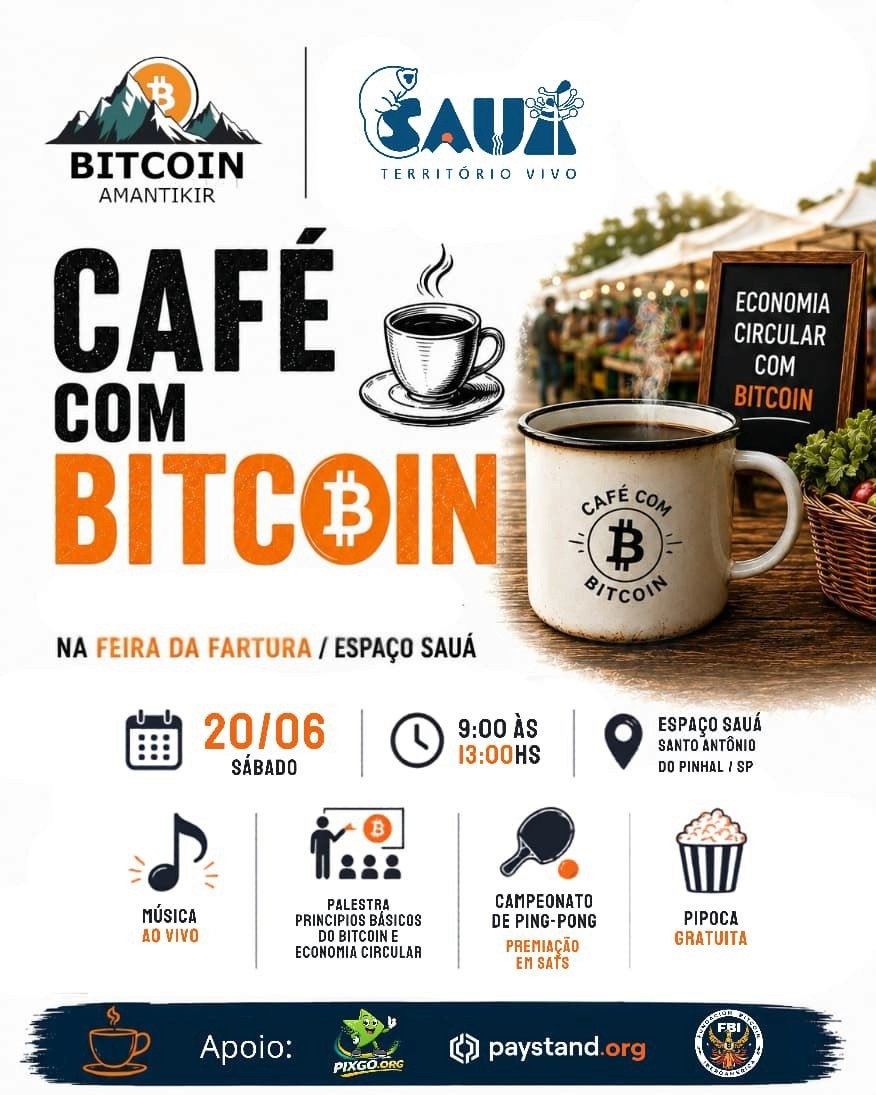
A Bitcoin Amantikir event sponsored by Paystand and FBI
Fadida added that he and his team are still applying for other grants, as they’ll need more funding to grow the project to be as big as they envision it.
Within the next two years, Fadida hopes to open a cultural center that can host a variety of events.
“It'll be a physical location where we can receive tourists and host workshops and classes — and not just for Bitcoin but for things like yoga and English classes, too. It’ll be a place people can go to learn or just sit there and have a little Satoshi coffee.”
What is more, Fadida also plans to start hosting youth camping trips and to offer extended retreats to adults.
“Right now, people come from different schools and spend the day here,” said Fadida. “I want to make it easier for students from more schools to come here and for people coming from other countries or even youth groups to stay for one week and learn.”
He also added that he’d like to onboard another 100 merchants in the coming years.
But he noted once more that his end goal isn’t Bitcoin adoption — it’s seeing the people with whom he works feel empowered and fulfilled. And savoring some of the physical fruits of his labor.
“I want to help people to learn more how to understand all these basic things I teach them, which can help them to be more themselves or just be happy and that's it,” said Fadida. “Well, that and I’d like some time to enjoy my honey.”
