
June 24, 2026
Community Spotlight: South Africa's Bitcoin Karoo
In 2024, Sarah Joubert had a revelation.
Joubert was an investment specialist at STANLIB, an asset management division of one of Africa’s largest banks, Standard Bank, and could no longer look away from the fact that the traditional financial system that employed her was just “a machine making fees,” as she put it. It was barely doing what it purported to do, which was to help people to preserve their wealth at a rate that outpaced inflation.
“The average CPI rate of inflation in South Africa is 5-6% and the investment returns on government bonds can be as high as 12%,” explained Joubert.
“A balanced fund aims for CPI +7% before advice fees, but our general bank and insurance brokers fees can be over 6%. That means that after fees people are generally not even beating inflation — and those are the lucky people with access to this gambling pit,” she added.
It didn’t seem like a fair deal.
But what really irritated her was that it was the wealthiest clients that received much lower fee structures.
“What I saw in practice was that only the high-net-worth individuals were able to access the best advice at the cheapest rate,” said Joubert. “And we’ve got reams of people that cannot even get access to this type of advice, let alone a bank account.”
The majority of people in South Africa get worse financial advice at a higher rate, which is often time upwards of 6%, according to Joubert.
This injustice didn’t sit well with her.
“At advisory rates of 6-8%, everything you've made from the system is gone,” said Joubert. “I was just like looking at this going, hold on, we're not even helping the people that actually need the help.”
It was at this point that Joubert made it a point to dive deeper into the details of a monetary technology she’d first heard about a decade prior: Bitcoin.
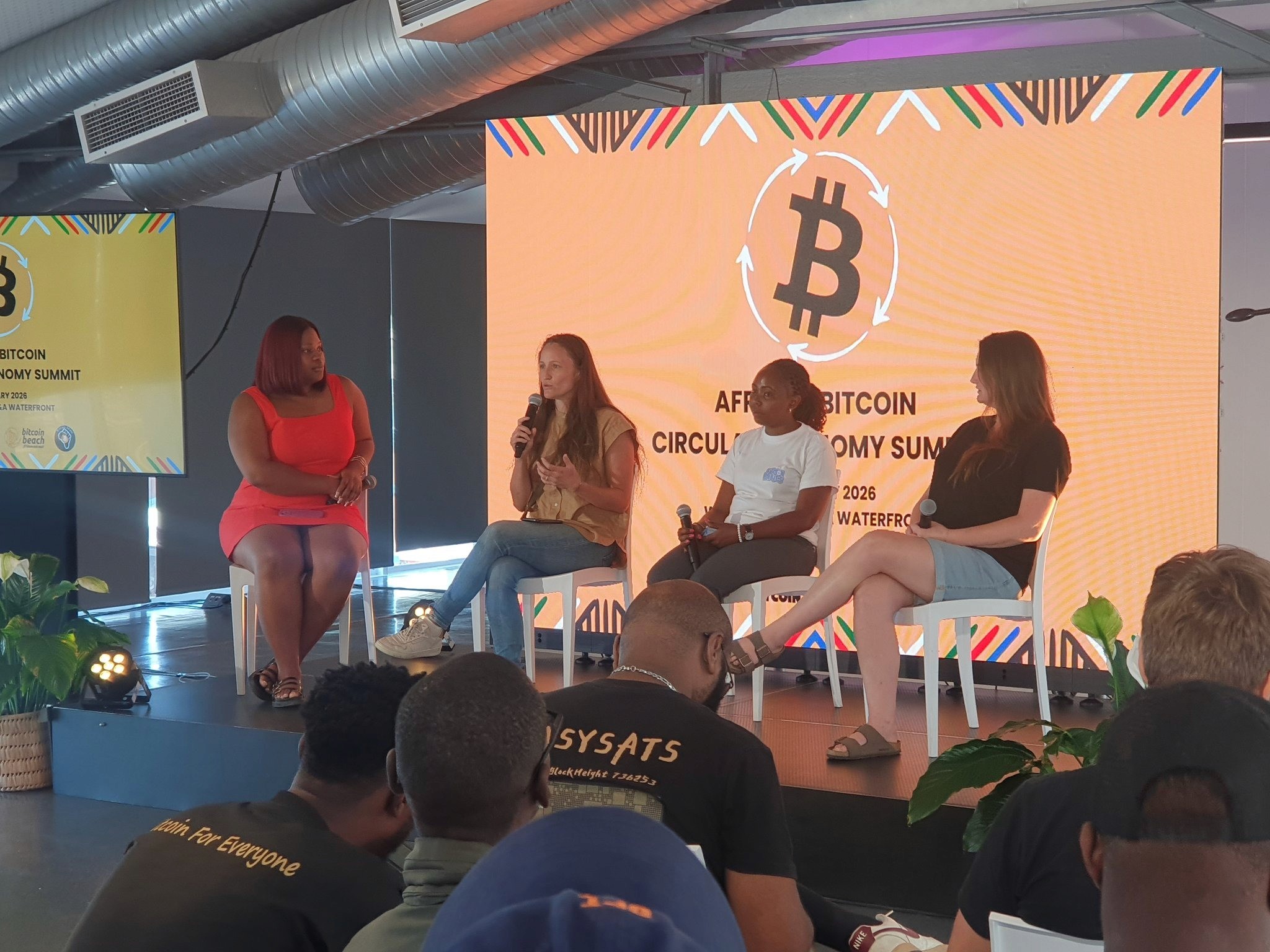
Joubert speaking at Adopting Bitcoin Cape Town 2026. | Image courtesy of Donna McCallum
Going All-in On Bitcoin
In 2014, Joubert was dating her now husband, Josh, who was also working in finance at the time.
Within the following two years, the two got more involved in the South African Bitcoin scene. They’d attended meetings at JoziHub in Johannesburg, a technology incubator and co-working space where they first met Carl van Wyk, who now runs Money Badger, a company that enables bitcoin payments that settle in South African rand, and Edwin Jones, founder of Bitcoin Witsand, a prominent South African Bitcoin circular economy.
Joubert spoke fondly of Jones; he was instrumental in teaching her and her now husband about the technical ins and outs of Bitcoin.
But she credits her husband above all for opening her eyes to Bitcoin, and she believes she likely would have overlooked it if it weren’t for him.
“If I'd hadn't met Josh, I think I would have fallen into the same bucket as most financial services people do, which is look at bitcoin as just another crypto for gambling with,” said Joubert.
When COVID hit in 2020, Joubert and her husband moved from Johannesburg to a permaculture farm in a quiet town called De Rust, which is located in the Karoo, a semi-desert portion of South Africa’s famed Garden Route.
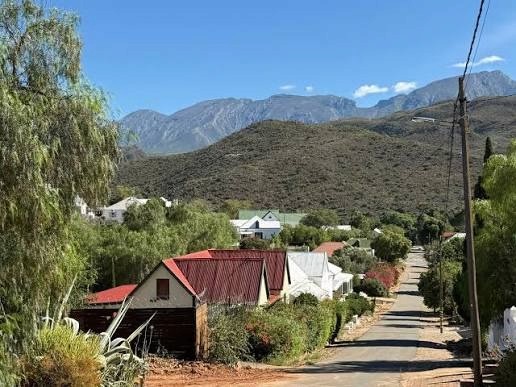
An image of De Rust, South Africa | Photo courtesy of Sarah Joubert
Here, Joubert continued to work in the investment management industry.
By 2023, she’d begun posting more regularly about Bitcoin via platforms like LinkedIn. Before long, she was called out.
“In my professional capacity, I was asked to ‘Stop posting about Bitcoin,’” recounted Joubert.
Being the firebrand she is, she informed them that she wasn’t willing to comply with their request.
“I just do what I do and told them to get stuffed — I said, ‘not a chance,’” recounted Joubert. “I was almost in a state of shock. You are supposed to be a symbol of the hope for people to outperform this very severe problem of inflation we have in society?”
It was only a matter of time before Joubert went her own way.
“I just kind of tumbled into a series of months after until I said to my husband, ‘I can't do this anymore — I have to leave,’” said Joubert.
She resigned in June 2024.
Two months later, she and her husband founded Bitcoin Karoo.

The Bitcoin Karoo logo.
Establishing Bitcoin Karoo
In the early days of Bitcoin Karoo, much of the work was centered around onboarding local merchants.
“We went around to everybody that we knew who owned a small business and said, ‘Would you like to accept Bitcoin?’” said Joubert.
Responses ranged from “Oh, Bitcoin… I was scammed two years ago and didn’t realise it was a self-custody asset” to “I’ve got no clue what Bitcoin is, but I really want to find out.”
Of the approximately three dozen merchants they’ve onboarded thus far, most are simply excited about the fact they can save on the 3-4% fees they’d otherwise pay credit card issuers by accepting bitcoin.

One of the many merchants from Bitcoin Karoo who accepts bitcoin. | Photo courtesy of Bitcoin Karoo
Joubert has focused mostly on the initial contact with merchants while her husband focused more on the educational work, technical merchant setups and marketing.
Her approach is practical, but they’re fueled by a deeply ideological stance.
She wants to see a world transformed by Bitcoin in that she wants to see power channelled out of the hands of big, faceless enterprises and into the hands of small business owners and everyday people.
“We realized that, even in the rural world, everything still centers around the city,” said Joubert. “Almost every farm around us supplies food to the cities, and every person who's living in the town travels 40 kilometers to go get food from the ShopRite and the Pick n Pay.” (Pick n Pay is a major supermarket chain in South Africa.)
She believes that family-run businesses struggle because they don’t have the same type of access to debt that bigger businesses have.
“What I would like to see in my community in 20 years' time is that more than 50% of our town is not traveling 40 kilometres to go buy food,” explained Joubert.
“I want us to be so strong in terms of individuals' capability to run their own family businesses, that you can comfortably do basic things in your community, like buy food and clothing,” she added, proudly noting that De Rust has a dress designer in their community.
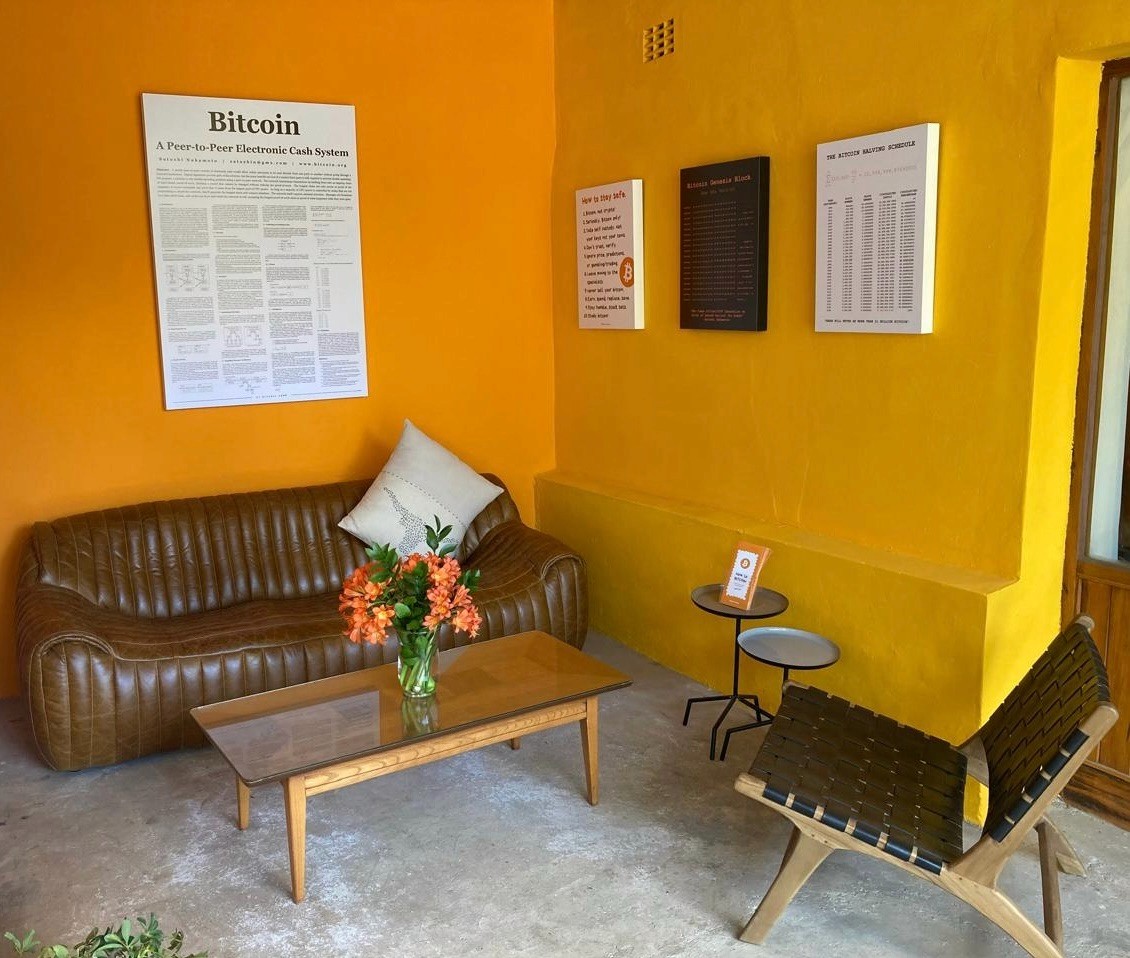
An area for Bitcoin education in one of the shops in Bitcoin Karoo. | Photo courtesy of Bitcoin Karoo
“Bitcoin means our communities will not have to compete with these enormous multinationals that can pick up cash in the market so cheaply.”
Bitcoin Karoo’s Three-Part Plan
To bring her vision to life, Joubert and her husband have put together a three-part plan.
The first dimension is education.
They started a program to educate the less-privileged youths in a nearby township called Blomnek. This part of the program includes offering tennis lessons to the attendees as a means to draw the students in, and then computer programming or Austrian economics-style business classes.
“We’ve renovated an old, dilapidated tennis club and taken on a staff member, who’s paid in bitcoin, to be a tennis coach,” shared Joubert.
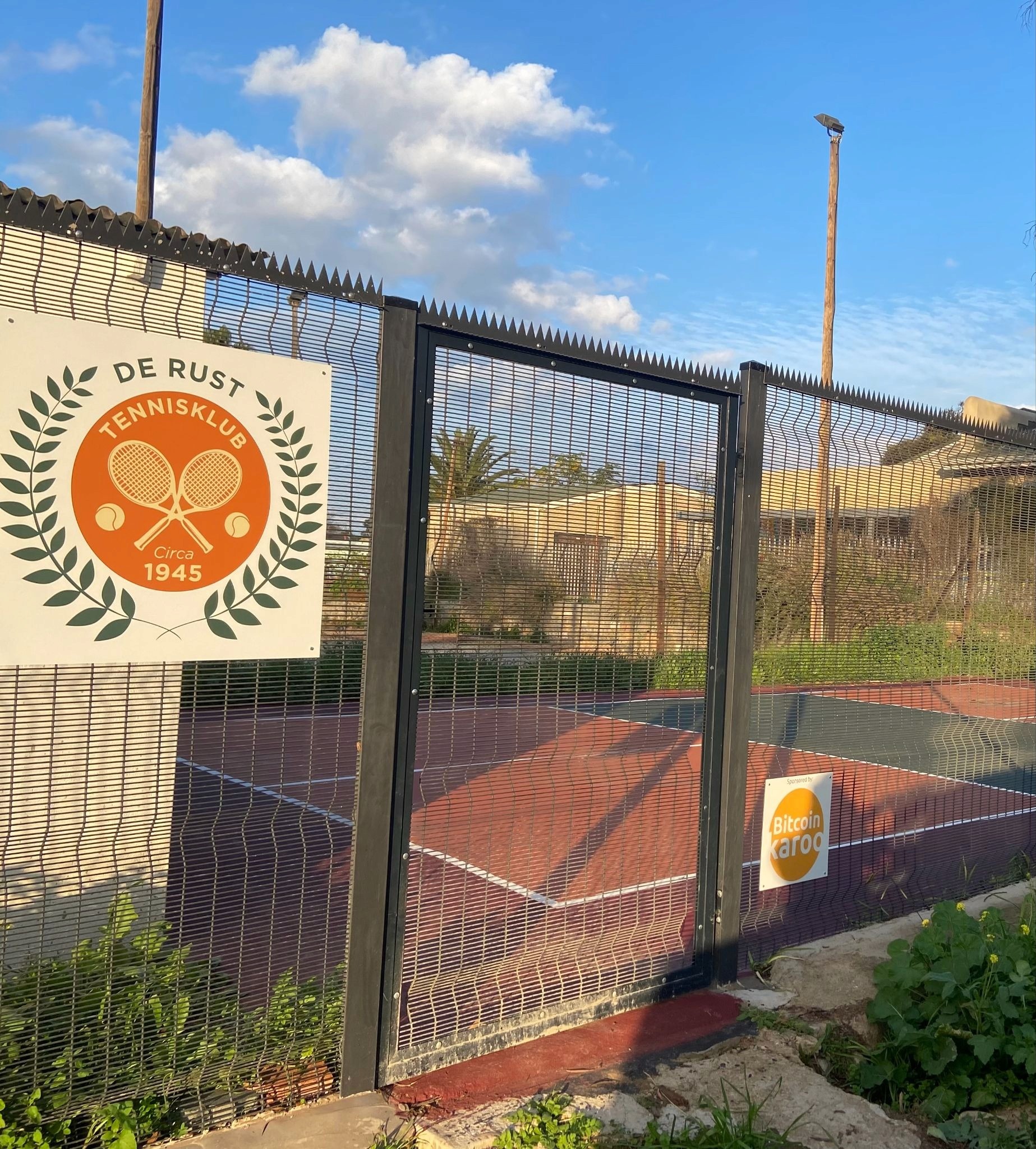
“The idea is that you can come for the tennis, but you will have to sit for 30 minutes after while we go through basic things like budgeting, bitcoin saving, spending in Bitcoin, teaching about delayed gratification, and the principles of putting away Bitcoin for periods of time,” she added.
The second dimension is putting the “circular” in “circular economy.”
“We intend to extend merchant adoption to the spaza shops in Blomnek while looking for more ways to get bitcoin salaries into our community members’ hands,” said Joubert.
Spaza shops, which originated in apartheid South Africa, are informal convenience stores typically run from a home or garage.
“We need more of the merchants in the township to accept bitcoin to start getting a circular economy going,” said Joubert.
The third, and perhaps most ambitious part is making De Rust and Blomnek more autonomous.
Joubert envisions the towns taking over services that the government would normally provide.
“Bitcoin will create systemic changes regarding community self sovereignty and overcome the Fiat mindset which says this is the government’s problem,” said Joubert. “What if DeRust and Blomnek looked after our own refuse as a start?”
Joubert and her husband are currently investigating ways to make waste a valuable resource that works for the economy and have waste pickers paid in bitcoin as part of their efforts to develop a blueprint for this vision.
Using Fedi in Bitcoin Karoo
Joubert and her husband are beginning to broach the topic of privacy within their community.
While she’s aware that privacy preferences vary from person to person and that most people are unfamiliar with privacy technology such as Signal, ProtonMail and TOR, she also understands that everyone values some level of privacy, including in their transactions.
And so she and her husband have begun to educate community members about the Fedimint protocol and are encouraging people to try using it.
“A lot of the work in Bitcoin is getting people to just see how Bitcoin and its related technologies work,” said Joubert. “It’s about getting people to just trust for a moment that they'll be okay, that they’re not going to get hurt using this technology.”
When it comes to Fedi, what really animates Joubert is the fact that you can make payments in the same app that you use to build a virtual community.
“I sometimes explain to people that if you want to be part of our community, you have to download Fedi, because our community is on the app, too,” said Joubert.
“We start with the community feature, and then show them how to put a little bitcoin in the app and let them know that they can spend that bitcoin at the shop down the road,” explained Joubert. “I use it to teach people to spend small amounts of Bitcoin and let them know that, with Fedi, they can practice doing so in a private place.”
Person by Person
After speaking with Joubert for an hour, it’s nearly impossible to believe that she was still working within the broken fiat system just two years ago.
It’s hard to imagine this mission-driven person, someone filled with energy, putting her efforts into helping the wealthy barely stay ahead of inflation, after seeing the look on her face when she talks about implementing her vision of putting power back into the hands of everyday people.
“It’s that fact that I’ve identified Bitcoin’s capability that I can’t turn away from,” said Joubert. “Whatever force created this — and it was a force, over 30 years of different people building the technology that amounted to Bitcoin — is a testament to the human spirit and our desire to be free. Human energy craves freedom.”
And what’s perhaps most notable about Joubert’s efforts is that she has a low time preference. She’s more concerned with fostering a genuine connection with those she teaches about Bitcoin than she is about reaching everyone all at once.
“Person by person, that's our model,” said Joubert. “I’d rather sit with one person for an hour or two and try and really get them to grasp what Bitcoin is and make sure that they understand it rather than push adoption without education.”
Oh, and in her spare time, she still posts about Bitcoin on platforms like LinkedIn. Only now, thanks in part to Bitcoin, she doesn’t have a boss looking over her shoulder.

