April 22, 2026
Community Spotlight: Bolivia’s Bitcoin Research
For a decade, Bitcoin was banned in Bolivia.
Until June 2024, the South American country was one of less than 10 countries in the world to completely prohibit its citizens and institutions from engaging with Bitcoin.
Within the first year the ban was lifted, the amount of bitcoin and crypto transactions in Bolivia surged 530%, as the country has experienced notable bouts of inflation and Bolivians have turned to bitcoin for relief.
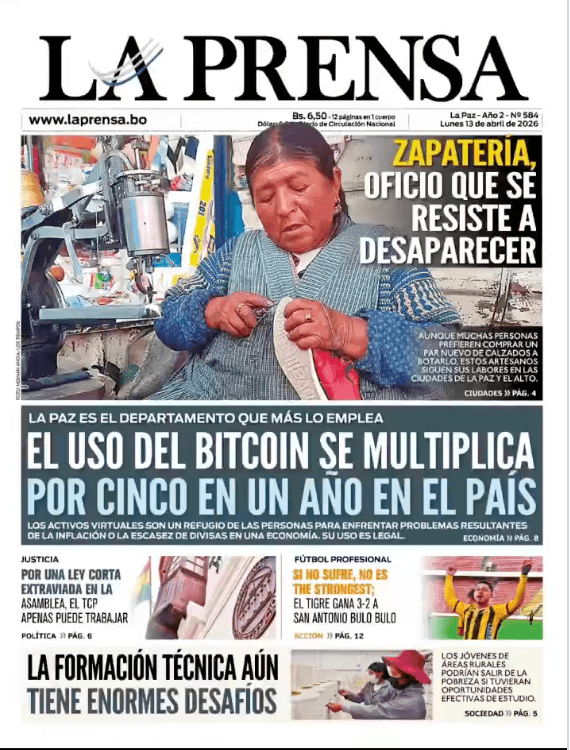
A headline on the cover of La Prensa, one of the largest newspapers in Bolivia, reads “Bitcoin use in Bolivia multiplies 5x in one year.”
But how did they know how to use Bitcoin so quickly after the end of Bolivia’s crypto ban?
According to Achachilabtc, one of the co-founders of Bitcoin Research, an organisation that helps to facilitate Bitcoin adoption in Bolivia, many Bolivians understood how to use Bitcoin because they’d already been buying it from one another peer-to-peer.
(“Achachila” means “grandfather” in the indigenous language Aymara.)
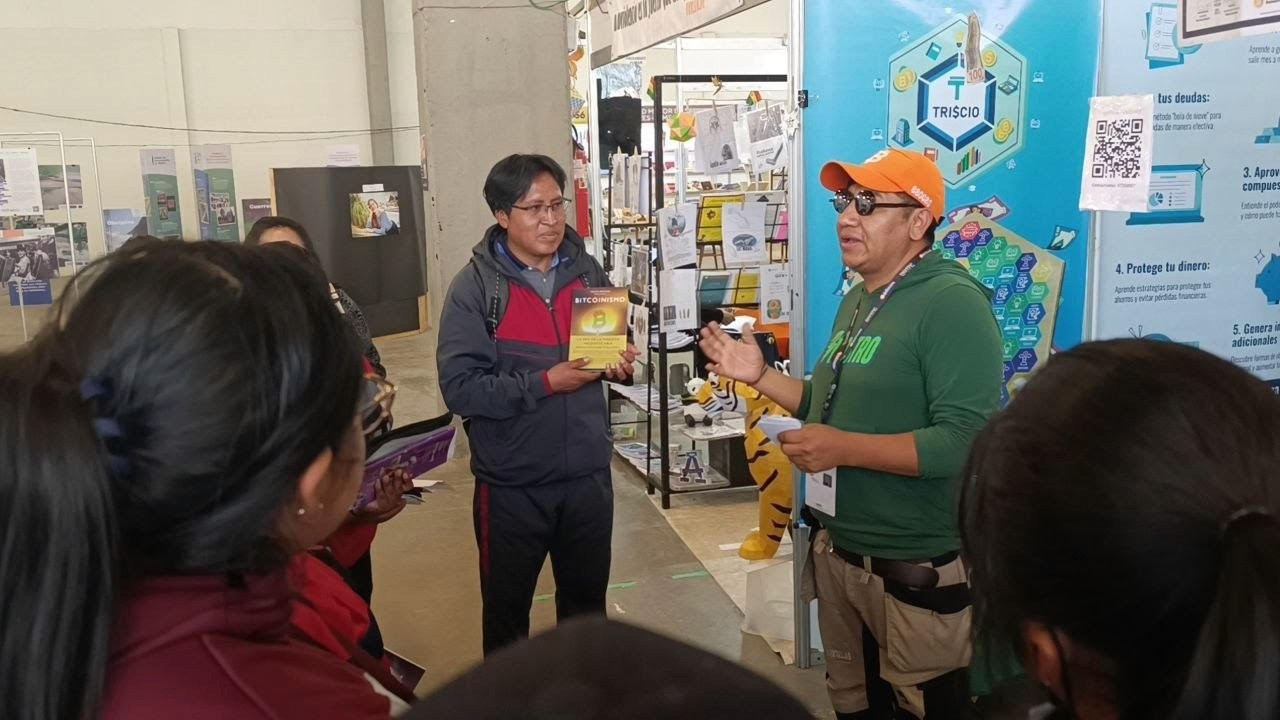
Achachilabtc teaching his fellow Bolivians about Bitcoin. | Photo credit: Bitcoin Reach
“Bolivia was one of the few countries to issue a Central Bank resolution prohibiting banks from interacting with digital assets,” explained Achachilabtc. “One positive aspect of this for my country is that the ban discouraged the Bolivian population from registering on centralised exchanges. This led to tools like Telegraph P2P trading services already existing by the time Bitcoin became legal.”
Achachilabtc and his co-founder at Bitcoin Research, Juanpybtc, were well-positioned to assist their fellow Bolivians in learning more about Bitcoin by the time it became legal. After all, they'd been studying it for years prior, preparing to actively educate their fellow countrypeople about it.
Today, Bitcoin Research hosts the largest Bitcoin Telegram community in Bolivia, BtcxBolvia, which has over 2,000 members. It has also created the following tools:
its own Lightning wallet, NueveD (more on this further down)
a KYC-free exchange, Mostro Boliviano, an offshoot of Mostro, a non-custodial P2P Bitcoin exchange
“We can confidently say that we possess and teach the tools for sovereignty,” said Achachilabtc.
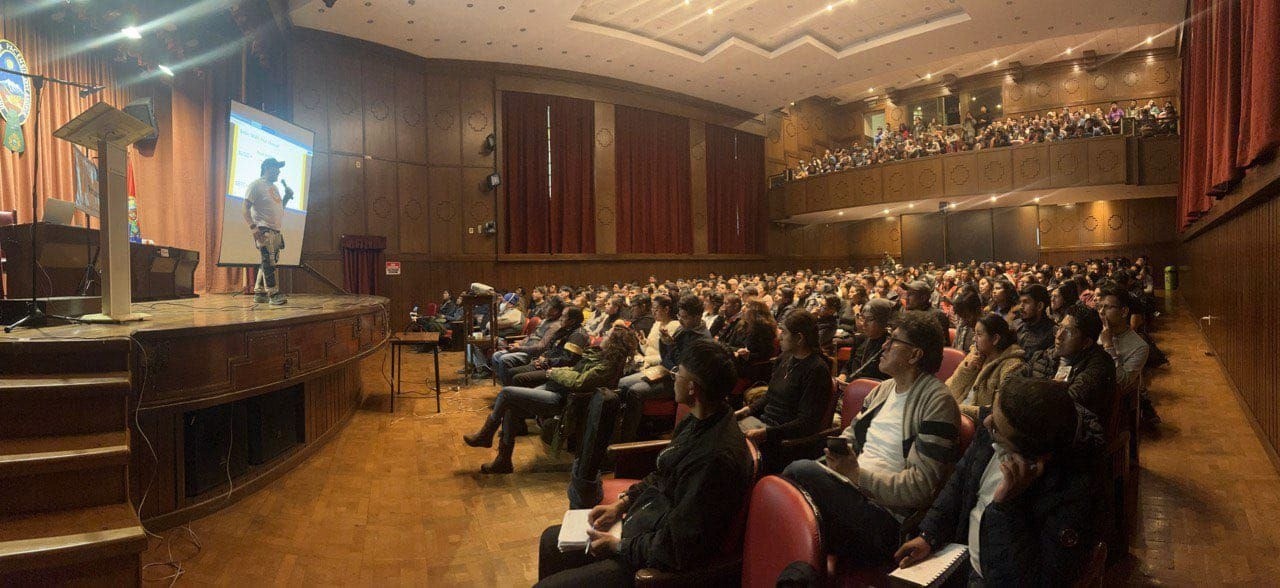
Achachilabtc speaking to a large audience in Bolivia. | Photo credit: Bitcoin Reach
Given how big of an impact Achachilabtc and the Bitcoin Reach team — comprised of Achachilabtc, Juanpybtc, and Gamelendrez — have had, you’d think Achachilabtc has been a Bitcoiner almost since Bitcoin’s inception, but it wasn’t that long ago that he was still a Bitcoin skeptic.
Discovering Bitcoin
Juanpybtc had been urging Achachilabtc to study Bitcoin since 2019. He’s grateful to Juanpybtc for trying to get through to him then, but, for some reason, it didn’t click at first.
“Juanpybtc began inviting me to his talks regarding new Bitcoin developments, but I didn’t take the subject seriously right away,” recounted Achachilabtc.
However, something shifted two years later.
After working as an environmental engineer in Colombia and Cuba, Achachilabtc’s work took him to Dublin, Ireland. It was there that something shifted.
While walking through the city one day, he spotted a Bitcoin ATM. This tangible manifestation of Bitcoin in the real world was apparently what he needed to see for Bitcoin to become real to him. He dived down the proverbial Bitcoin rabbit hole soon after.
“That was the moment my mind went into overdrive, shattering all my preconceived notions,” recounted Achachilabtc.
“I delved into Bitcoin, attending conferences such as Bitcoin Prague in the Czech Republic, Baltic Honeybadger in Latvia, and Watch Out, Bitcoin! in Spain,” he added. “Soon after, Bitcoin Research was born.”
Starting Bitcoin Research
Not long after developing his deep conviction about Bitcoin, Achachilabtc returned to Bolivia, ready to make Bitcoin believers of his fellow Bolivians.
“I decided to return to my home country to help ‘Bitcoinise’ it,” said Achachilabtc.
He and Juanpybtc began teaching Bolivians about Bitcoin, always with privacy, security, and self custody at the center of their educational efforts.
Achachilabtc, a holder of a master’s degree in occupational risk prevention, also highlighted Bitcoin Research’s academic focus.
“A defining characteristic of our work is our academic approach; we have authored a research paper on Bitcoin (which begins on page 90 of this document), participated in seminars, and even organised a virtual conference called BETCON (Bolivian Engineering and Technology Congress),” said Achachilabtc.
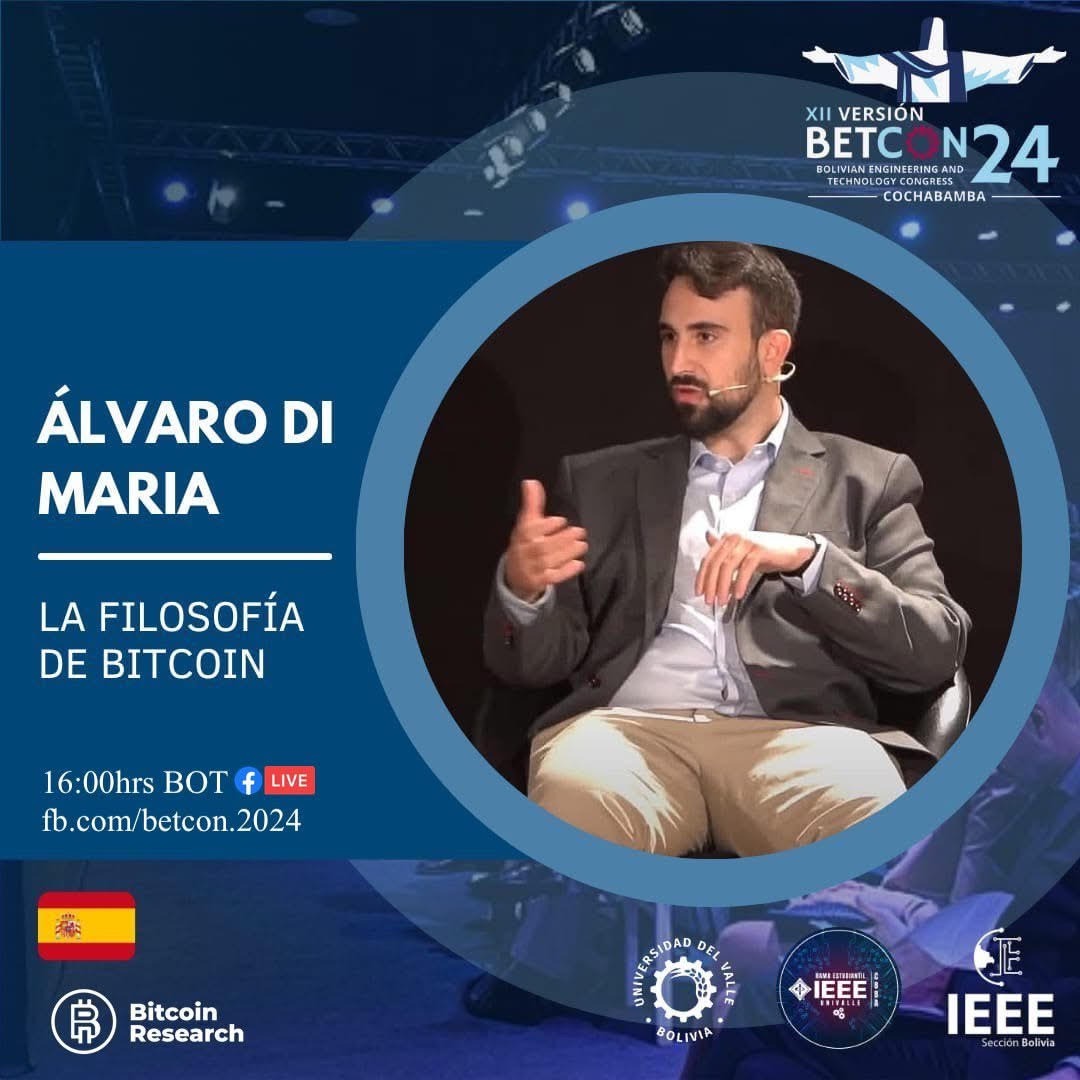
A promotional card for a speaker at BETCON 2024, organised by Bitcoin Research.
That said, the work that Bitcoin Research does is also far from just academic or theoretical.
Achachilabtc, Juanpybtc, and their team have also used Bitcoin to make a real-world impact.
Bitcoin Research’s Impact
In the latter part of 2024, soon after Achachilabtc and Juanpybtc founded Bitcoin research, they began raising funds to help support firefighters who were battling deadly blazes in the eastern part of Bolivia.
“Our first activity as a community was raising bitcoin to assist the volunteer firefighters during the Chiquitania wildfires,” said Achachilabtc.
The wildfires devastated the Chiquitanía region Bolivia from July to November of 2024, and Achachilabtc and the Bitcoin Research took the opportunity to illustrate the power of bitcoin as a fundraising tool.
Achachilabtc and the Bitcoin Research team have also taught at both rural and urban schools and teach visually-impaired individuals about Bitcoin.
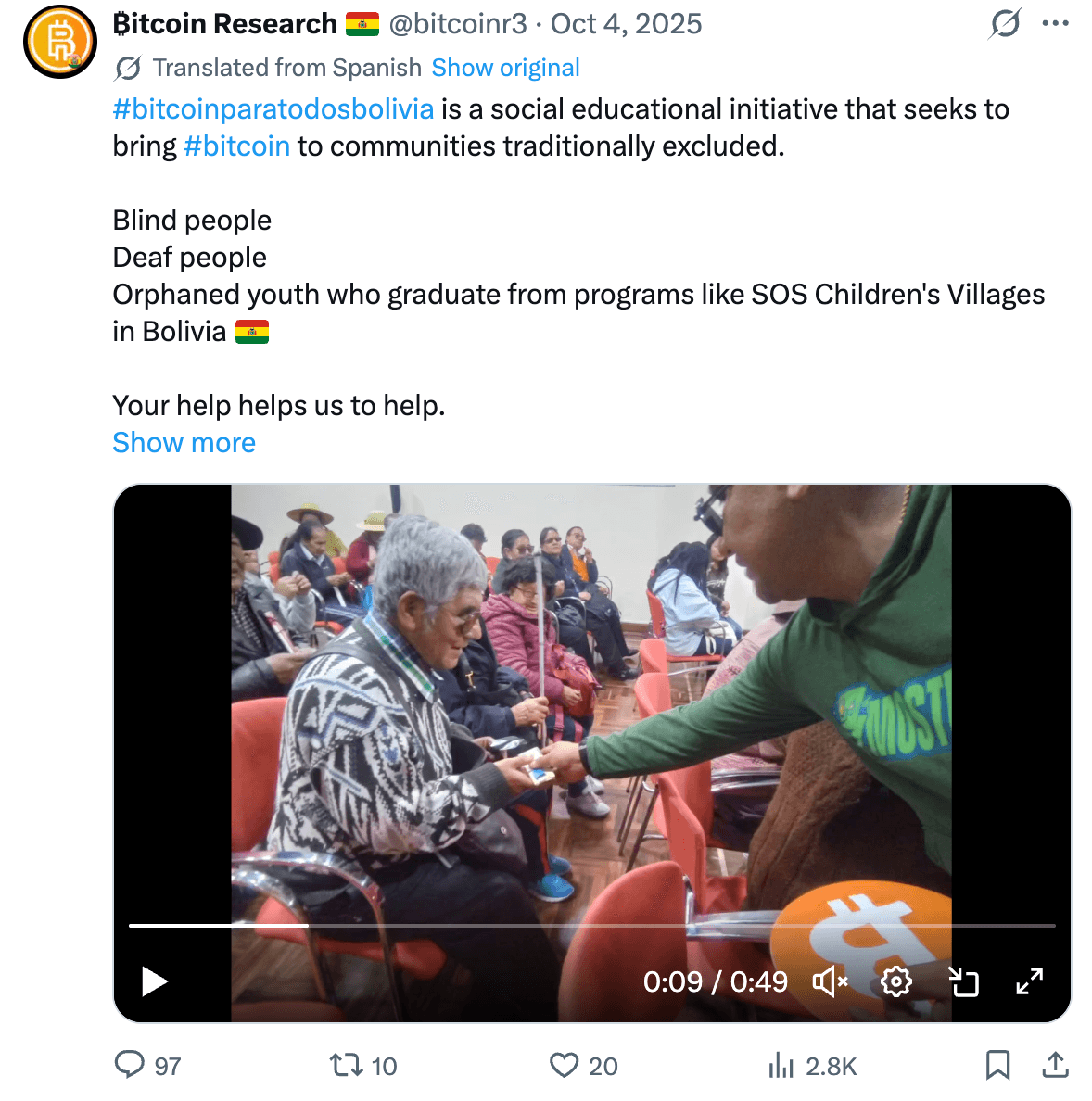
The Bitcoin Reach team, teaching the blind about Bitcoin.
Plus, they teach Bitcoin at universities from time to time and facilitate their own Bitcoin circular economy, which has been growing exponentially.
“When we first started, the circular economy consisted of just three locations accepting bitcoin, according to BTC Map, whereas today, we have 115 locations, not counting street vendors,” explained Achachilabtc.
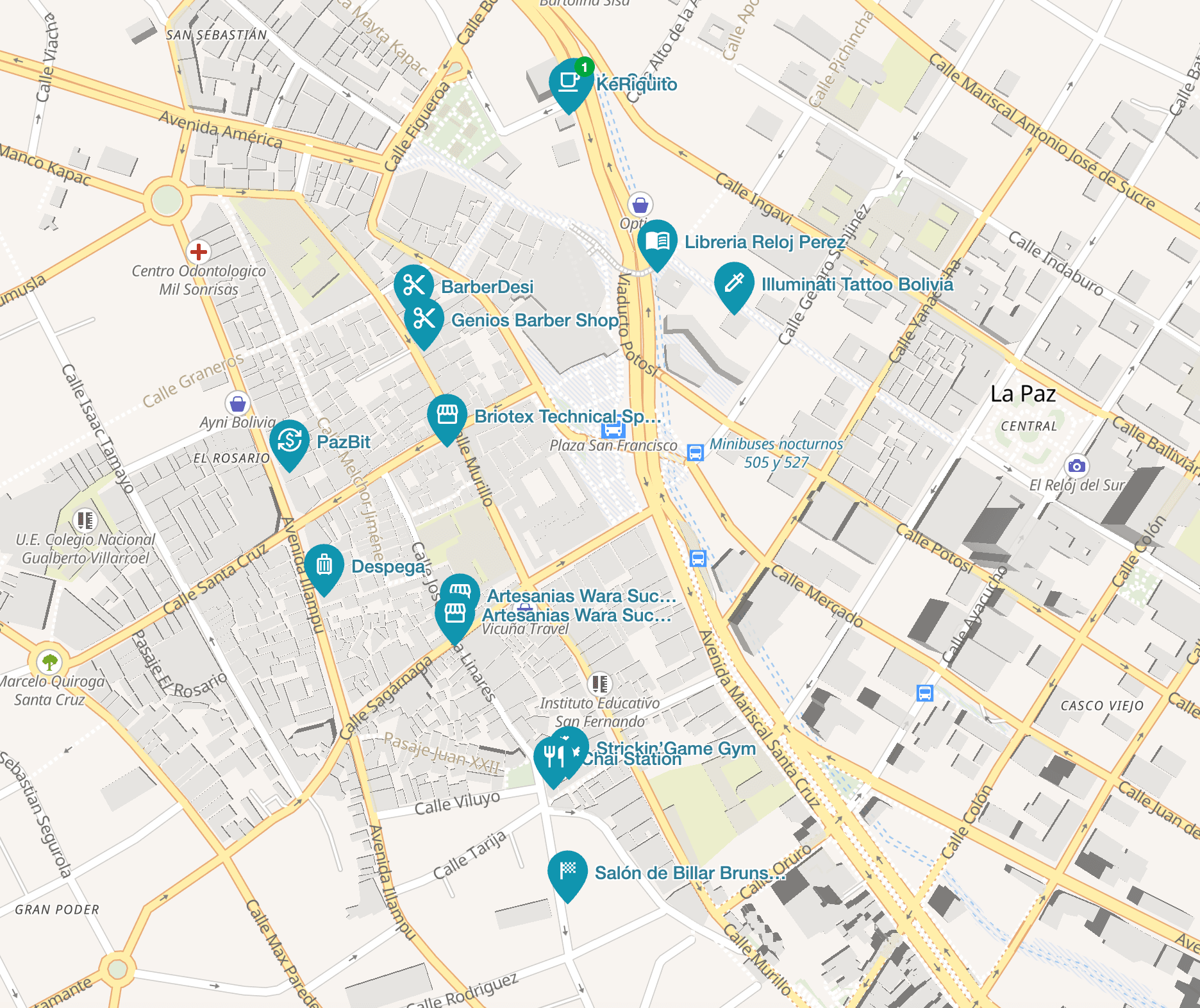
A screenshot from BTC Map of merchants who accept bitcoin in downtown La Paz.
And as of the last year and a half, more and more people within these circular economies have begun using Fedi.
Bitcoin Research Adopts Fedi
As mentioned, privacy is at the center of the work that Bitcoin Research does.
Because of this, they’ve begun teaching their community members how to use Fedi, which gives users privacy by default.
“We view it as a tool that facilitates faster and more private adoption,” said Achachilabtc.
But privacy is just one dimension of what the team at Bitcoin Reach like about Fedi. Another is that Fedi can be used to make transactions without the need for internet, as Fedi users can make ecash payments to other Fedi users in an internet-free manner.
“In my country, there are communities that lack internet access,” explained Achachilabtc. “Starlink is now available here, but it remains inaccessible to remote communities.”
Achachilabtc also highlighted a number of Fedi Mini Apps that have become go-tos for the Bitcoin Research community.
BTCPay Server, BTC Map, AirBTC, Tiankii POS, and the aforementioned NueveD are amongst the most popular Fedi Mini Apps, according to Achachilabtc.
Tiankii POS and NueveD were made especially for Bolivians.
Tiankii POS is a payment gateway that the Bitcoin Research team utilises within their circular economies. It was also the second tool to introduce market-based pricing for the US dollar (USD) relative to the Bolivian peso.
Achachilabtc noted that this pricing mechanism is important because the Bolivian government sets a USD/BOB exchange rate that is much lower than the market rate, which can affect how much people pay for bitcoin when they purchase it through methods that don’t require KYC.
NueveD.lat is a Lightning wallet built specifically for the Bolivian context. It was created by Forte of Cuba Bitcoin and is powered by LNBits.
Achachilabtc added that he hopes to see Mostro added as a Fedi Mini App soon.
(We’re looking into it, Achachilabtc! Stay tuned!)
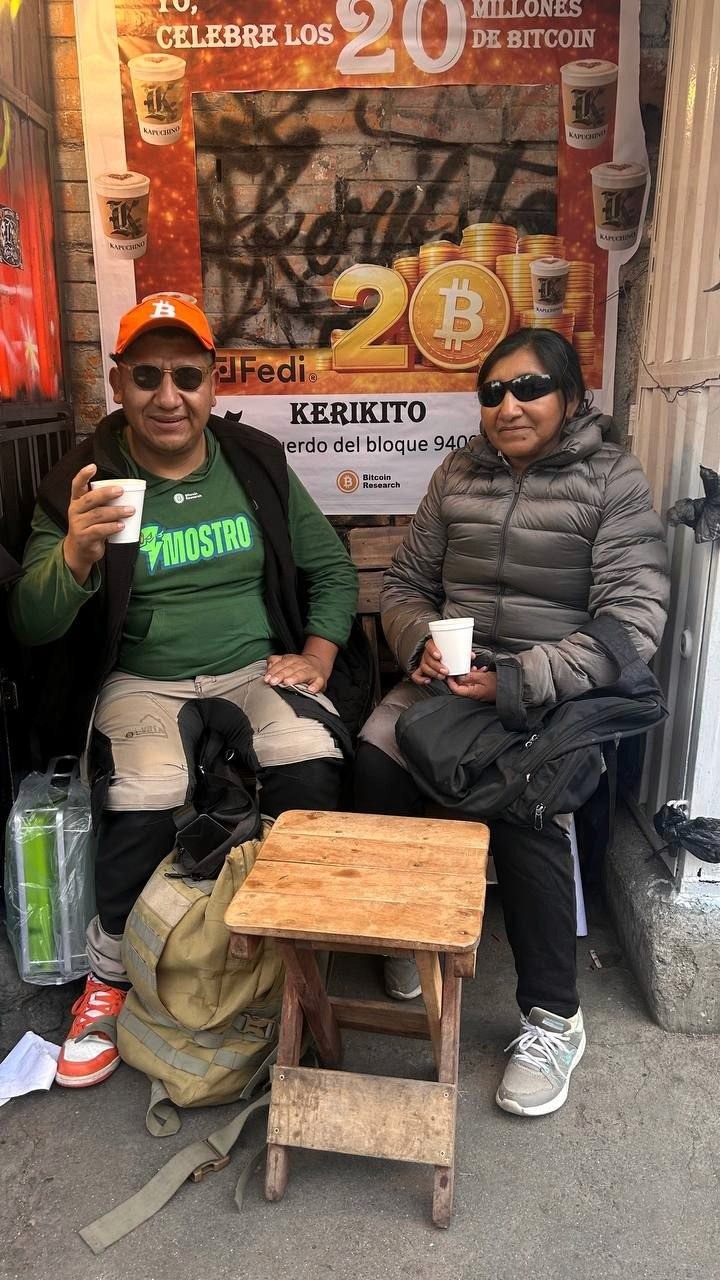
Achachilabtc wearing a Mostro T-shirt.
Guardians of Bitcoin’s Principles
While Achachilabtc is optimistic about Bitcoin adoption in Bolivia, he’s the first to admit that the work he and the Bitcoin Reach team does doesn’t come without its challenges.
This is particularly true of the work that he does with the blind community that Bitcoin Reach works with.
“We face the notable challenge of guiding blind individuals toward self-custody,” said Achachilabtc.
He added that he and the Bitcoin Research team also have to contend with the stigma around Bitcoin, as there have been numerous Bitcoin-related scams in Bolivia, which has left many Bolivians “fearful,” as Achachilabtc puts it.
He added that it doesn’t help that “crypto influencers” do little to nothing to differentiate between Bitcoin and other crypto assets and networks.
“They don’t even understand the difference,” Achachilabtc said.
“However, I suspect that they’re being paid not to understand it,” he added.
This is why the work that Achachilabtc, “the grandfather of Bitcoin who watches over the grandchildren,” as he refers to himself, and the Bitcoin Research team do is so important.
“We are some of the people in Bolivia who truly understand Bitcoin,” said Achachilabtc. “This makes us, in a sense, the guardians of Bitcoin's principles in our country.”
