April 1, 2026
Community Spotlight: Bitcoin Indonesia
“Is this it?”
This is what Dimas Suya Alfaruq (“Dimas”), co-founder of Bitcoin Indonesia, thought to himself once he’d found a certain level of success in life.
Dimas, a native Indonesian, had successfully completed a masters degree in engineering in Germany and had lived and worked in both Germany and Switzerland for a total of 15 years, by the time he’d asked himself this question.
He was aware that he had a number of notable achievements under his belt, but something felt off.
“It’s a dream for Indonesians to go to Germany to have a career, but I felt there had to be more to life than what I was experiencing,” Dimas told me in an interview. “I felt like I was stuck on a hamster wheel.”
That feeling of being stuck dissipated soon after he found Bitcoin in 2016, though.
Since then, he’s not only felt the financial benefits of holding bitcoin, but he’s dedicated much of his life to teaching Indonesians what Bitcoin is and how to use it.
In the process, he co-founded Bitcoin Indonesia, a Bitcoin organization that educates Indonesians about Bitcoin across the country, and became one of the prominent faces of the Bitcoin movement in Indonesia.
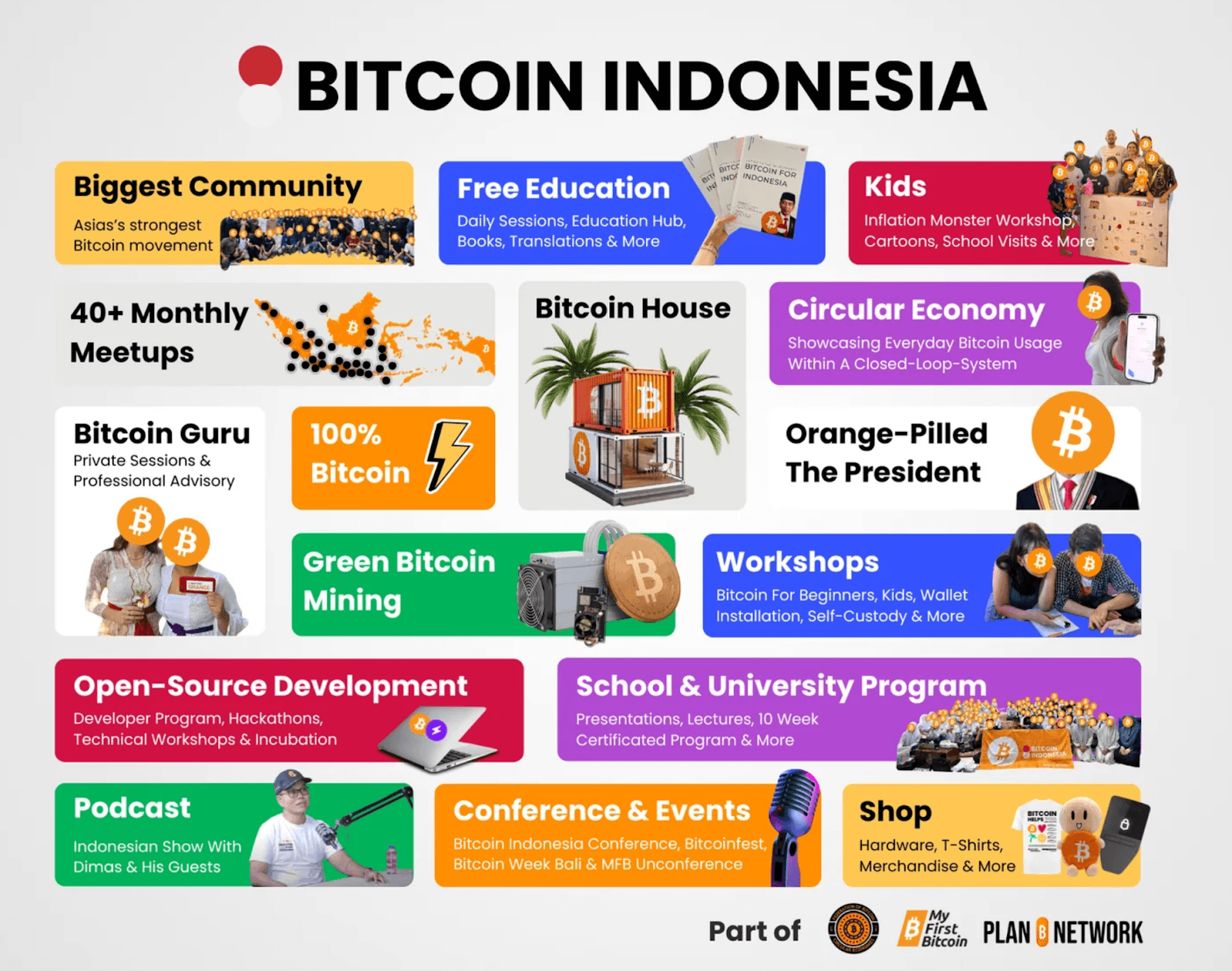
An image from the Bitcoin Indonesia website highlighting the many different dimensions of Bitcoin Indonesia
For these reasons and many others, we at Fedi couldn’t be more excited to work with Dimas, an early adopter of Fedi and someone who has helped make it both easy and legal for Indonesians to transact with bitcoin via Fedi.
Dimas describes how Bitcoin is for everyone
But before we get to that part of the story, let’s rewind back toward the beginning of Dimas’ Bitcoin journey.
The Road to Founding Bitcoin Indonesia
Like many when they first stumbled upon Bitcoin/crypto, Dimas bought a “diversified portfolio” of digital assets in 2016, which, to his pleasant surprise, all increased in value going into 2017. The bad news was that the prices of all but one had fallen by over 90% by 2018.
That one was bitcoin, and while it, too, had a tough year in 2018, Dimas was convinced of its superior properties when compared to other digital assets. For this reason, he’s been holding bitcoin since he first bought some in 2016, despite the ups and downs in its price.
By 2021, Dimas moved home with the intention of being closer to family and working in the Bitcoin space. Governments across the world had begun printing money en masse to keep their economies afloat during the COVID pandemic and Dimas wanted to be home to help both his family and his country to navigate the financial strain it would inevitably face because of currency debasement.
“When money is easy to make, society begins to break,” said Dimas, quoting the popular Bitcoin-friendly children’s show Tuttle Twins. “People didn’t understand this at the time, though.”
He knew wanted to be the person to help them get it, but he wasn’t in a place financially to bring his Bitcoin-only education vision to life right when he’d returned home.
So, he took on an “education lead” role at an Indonesian crypto exchange, where he worked for a year and a half.
However, in doing that work, he felt a dissatisfaction much like the type he felt back in 2016 before he found Bitcoin. Something again was off.
“I was working at the crypto exchange, but my heart was in Bitcoin,” said Dimas.
He became somewhat disenchanted as he noticed that the crypto exchanges only cared about trading fees, as he felt that they were missing the point.
“They didn’t really care about Bitcoin,” said Dimas. “They didn’t really care about human rights, and they didn’t really care about freedom and sovereignty — all of these philosophies associated with Bitcoin.”
By 2023, however, Dimas had been freed up to pursue what he really wanted to pursue: Bitcoin education.
And so he founded Bitcoin Indonesia with the help of three other co-founders: Keypleb, Diana, and Marius.
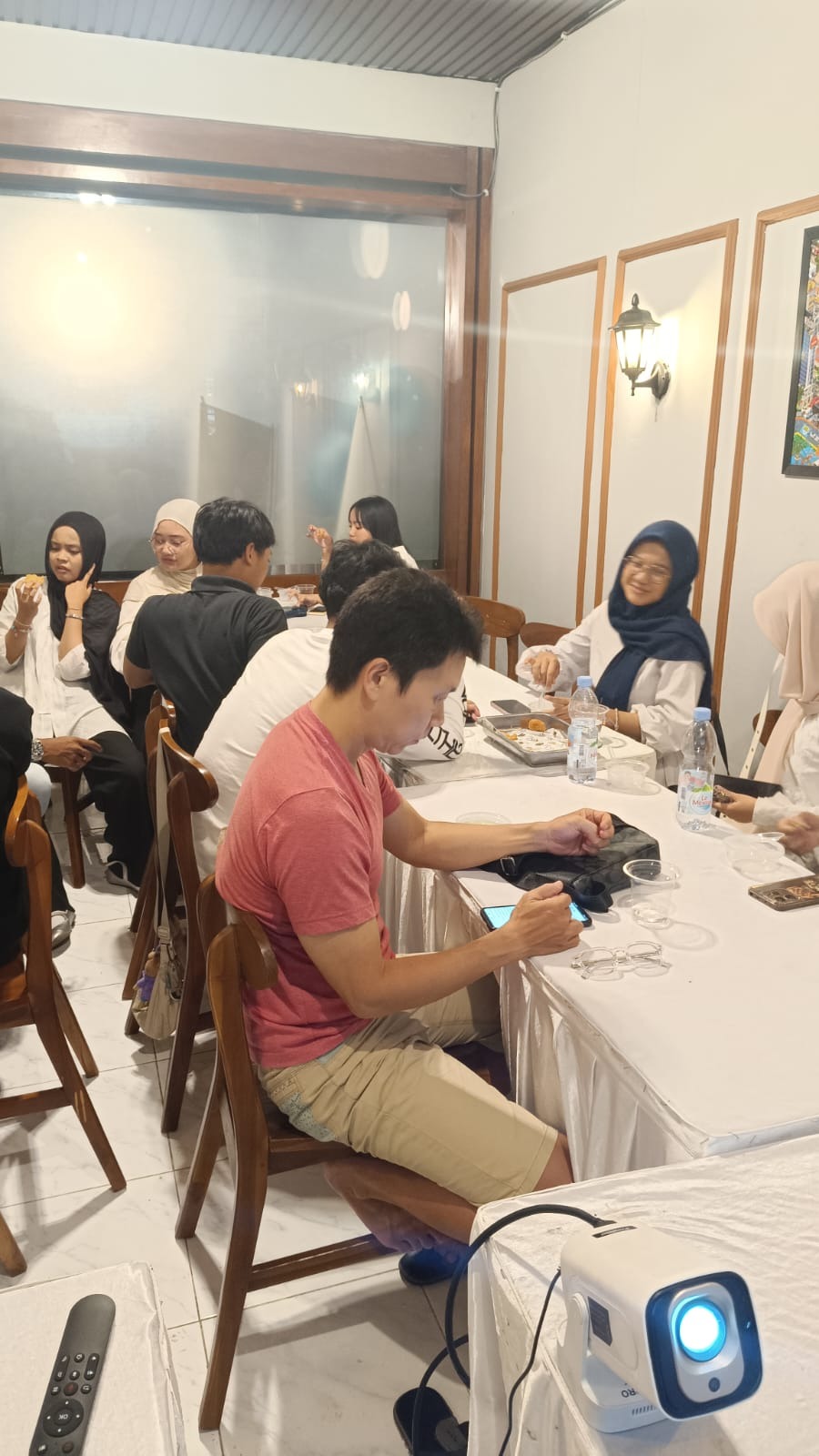
A scene from a Bitcoin Indonesia-sponsored meetup
The Early Days of Bitcoin Indonesia
By early 2023, Dimas and his co-founders at Bitcoin Indonesia were off to the races.
“We started by creating a website,” said Dimas. “We spent over 200 hours translating articles about Bitcoin as a tool for human rights and a tool for personal sovereignty from English into Indonesian.”
He and his team took to social media, as well.
“We saw that in Indonesia people use Instagram more than Twitter or TikTok, so we built the nicest, simplest, and fun way to teach people about Bitcoin via Instagram,” explained Dimas. “We’ve grown that account to more than 27,000 followers.”
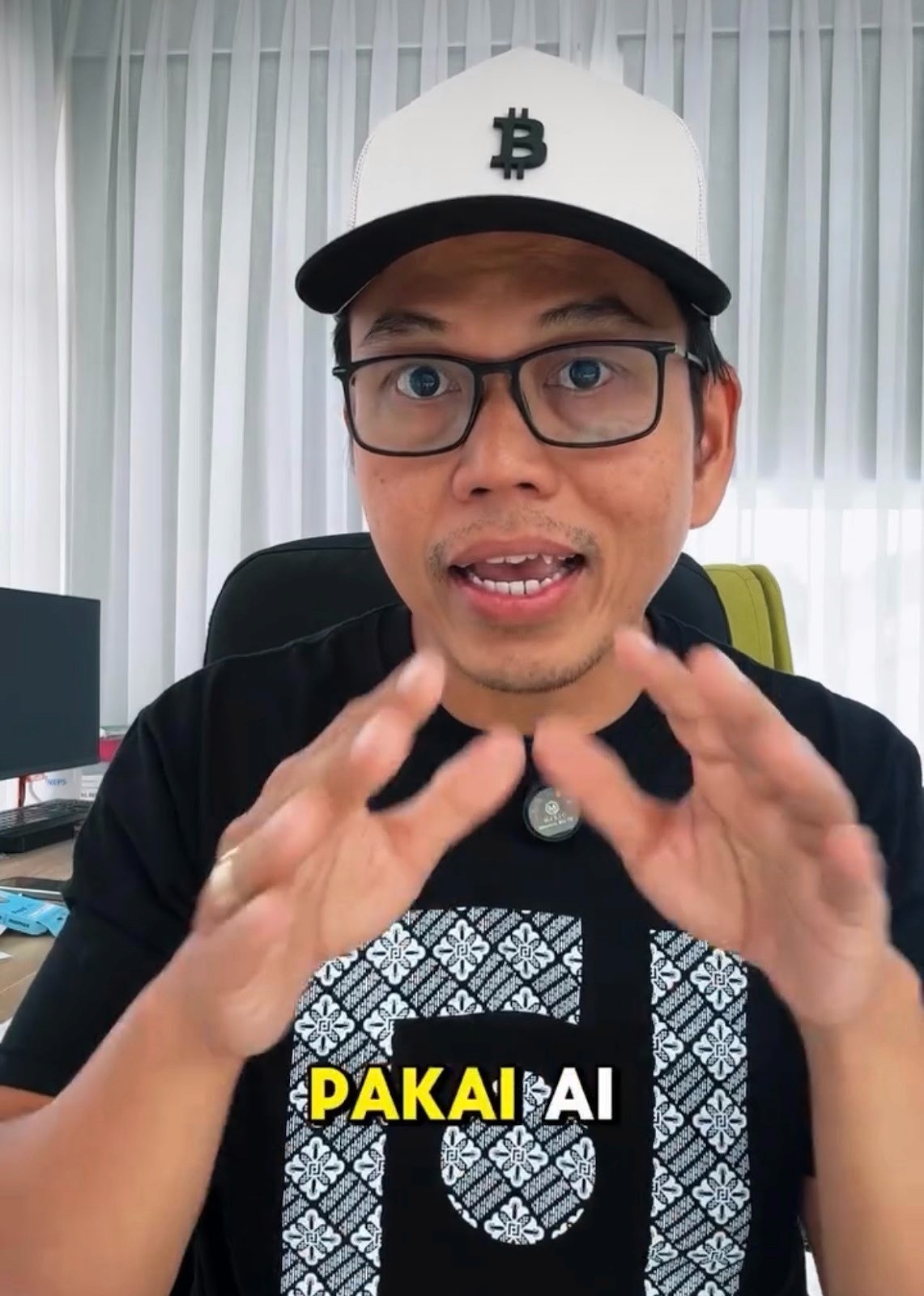
Dimas, wearing a Fedi shirt in an instructional video he posted to his personal Instagram account
What is more, Bitcoin Indonesia also now helps organize over 40 monthly meetups around the country; supports Code Orange, a training programs for open-source developers (Keypleb is now focused on Code Orange and is no longer involved with Bitcoin Indonesia more broadly); runs Bitcoin House Bali; and provides free daily Bitcoin educational sessions for its members.
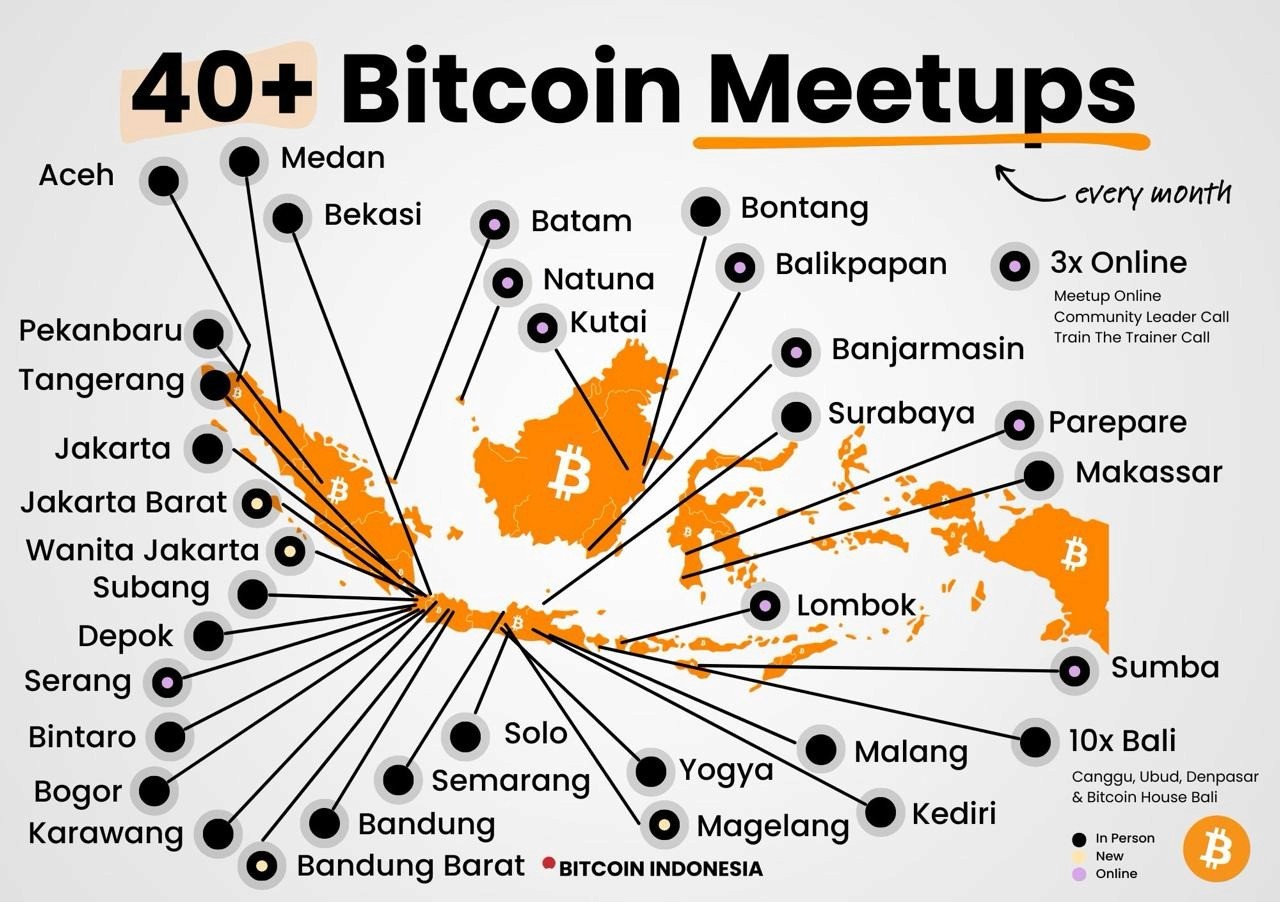
Meetups that the team from Bitcoin Indonesia helps organize across Indonesia
Dimas and his team have successfully reached many Indonesians with their message, which is centered around bitcoin being much more than just an asset to be traded on an exchange.
“They didn’t know you could save bitcoin and send it to others,” said Dimas about how most Indonesians thought about Bitcoin before he and the Bitcoin Indonesia team began educating people about Bitcoin.
That said, he noted that sending bitcoin, especially in the context of using it for payments, wasn’t something many Indonesians had thought about, as the Indonesian government has strong laws against using bitcoin or other currencies as a medium of exchange.
With a little legwork, Dimas learned that the same laws didn’t apply to ecash.
This is where Fedi came in.
Finding Fedi
In 2023, Dimas met Fedi’s Southeast Asia Community Master, Dea Rezkitha.
When he heard she was organizing the Indonesia Bitcoin Conference, he volunteered to help her.
In working with Rezkitha, Dimas learned about her work with Fedi.
Before long, he realized that Fedi provided the solution he’d been looking for when it came to Bitcoin adoption.
His community quickly started one of the first ever federations on Fedi and soon after learned that spending ecash tethered to bitcoin within a federation was permissible in Indonesia.
Dimas’ personal lawyer, one of the lawyers who represented the crypto exchange for which he’d worked, proposed that Dimas pitch the powers that be on the notion that ecash was the same as rewards points, which people are legally permitted to spend in Indonesia.
“Why don’t you just use Fedi like a point system, something like Starbucks rewards points that people can exchange?” suggested the lawyer, according to Dimas.
This was music to Dimas’ ears.
By August 2025, he presented what he termed Fedi’s “closed-loop system,” a system he and his team had been facilitating in Bali for approximately one year, to members of the Indonesian government — including those in the office of the country’s Vice President.
Much to Dimas’ delight, they found his proposal to be copacetic.
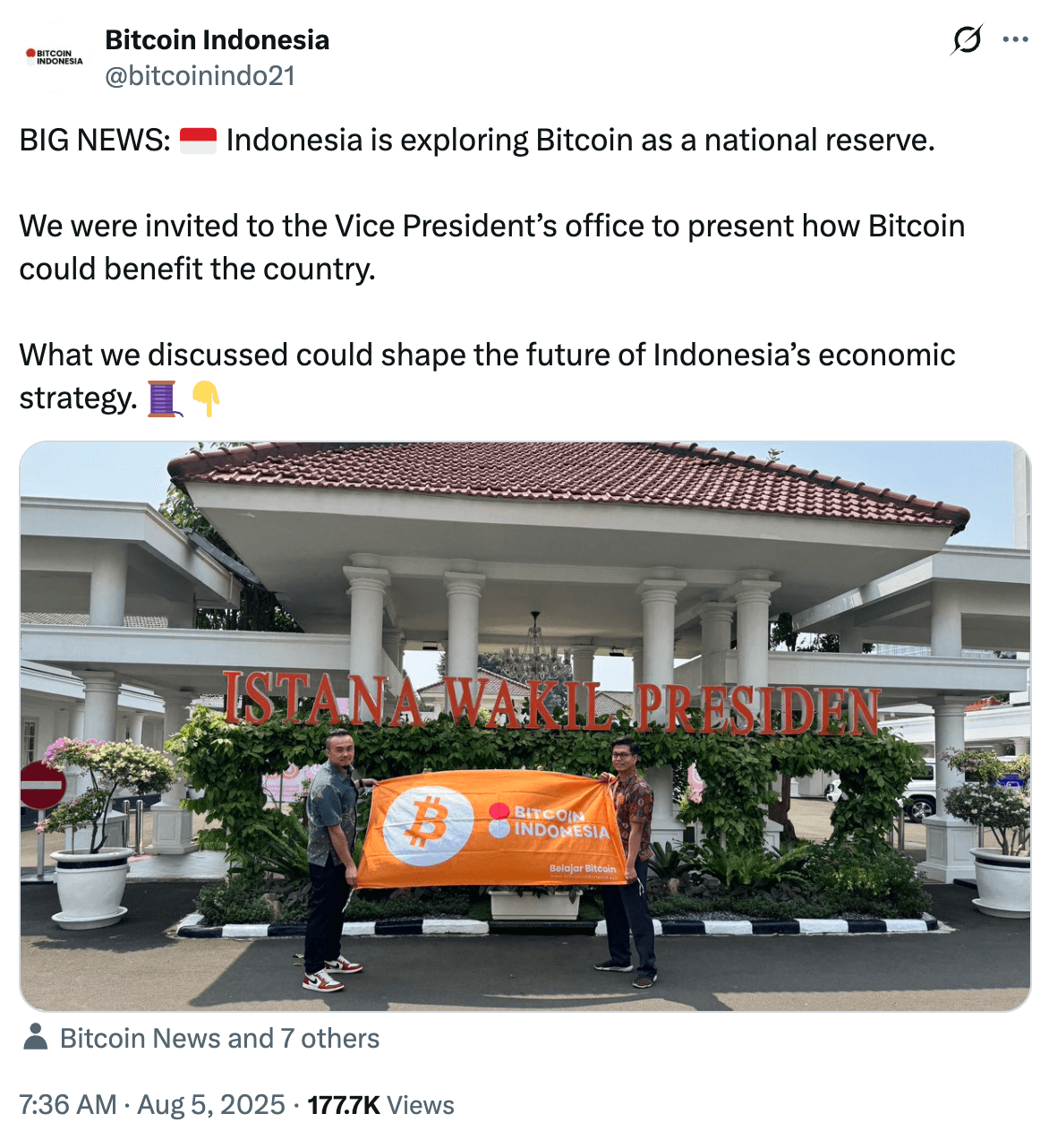
An X post from the Bitcoin Indonesia account when Dimas visited the office of Indonesia’s Vice President
Using Fedi in Indonesia Today and Dimas’ Broader Vision for Fedi
Dimas shared that it’s been relatively easy onboarding Indonesians to Fedi, mostly because of the amount of young people in the country.
“We have a boom of youngsters between the ages of 25 and 30 who are already digitally native,” explained Dimas. “So, when we introduced Fedi as a way to use bitcoin for payments, they got it instantly.”
He added that most payments in Indonesia are already digital and that people are accustomed to scanning QR codes to make payments, which is how you pay with Fedi.
In early February of this year members of 16 Bitcoin communities in Bitcoin Indonesia used Fedi to make payments at an event that Dimas and the Bitcoin Indonesia team organized called “Sats-urday Market.” 400 members of these communities used Fedi to transact with 10 small businesses at a three-day event in Bandung.
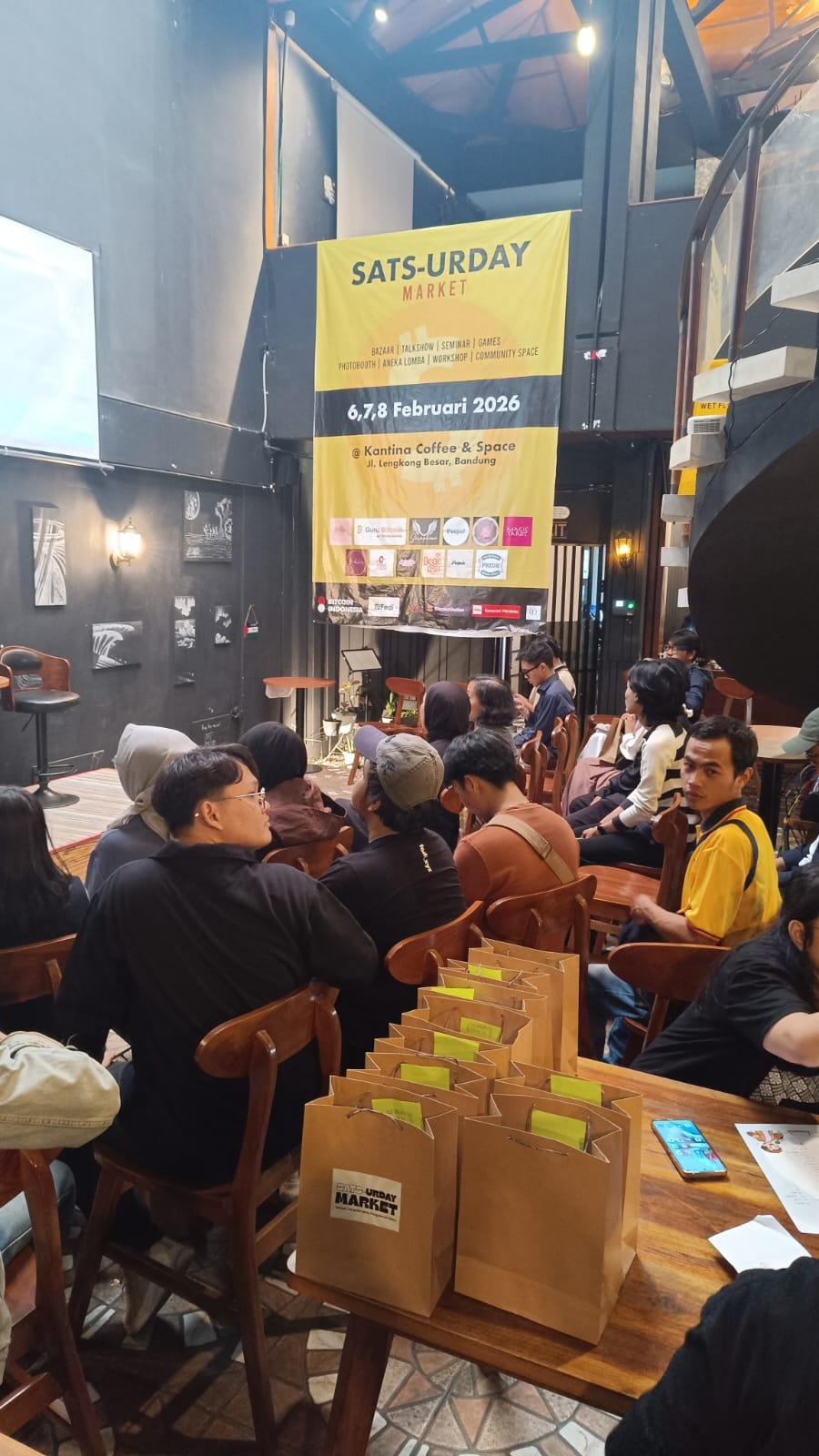
A scene from the “Sats-urday Market” this past February
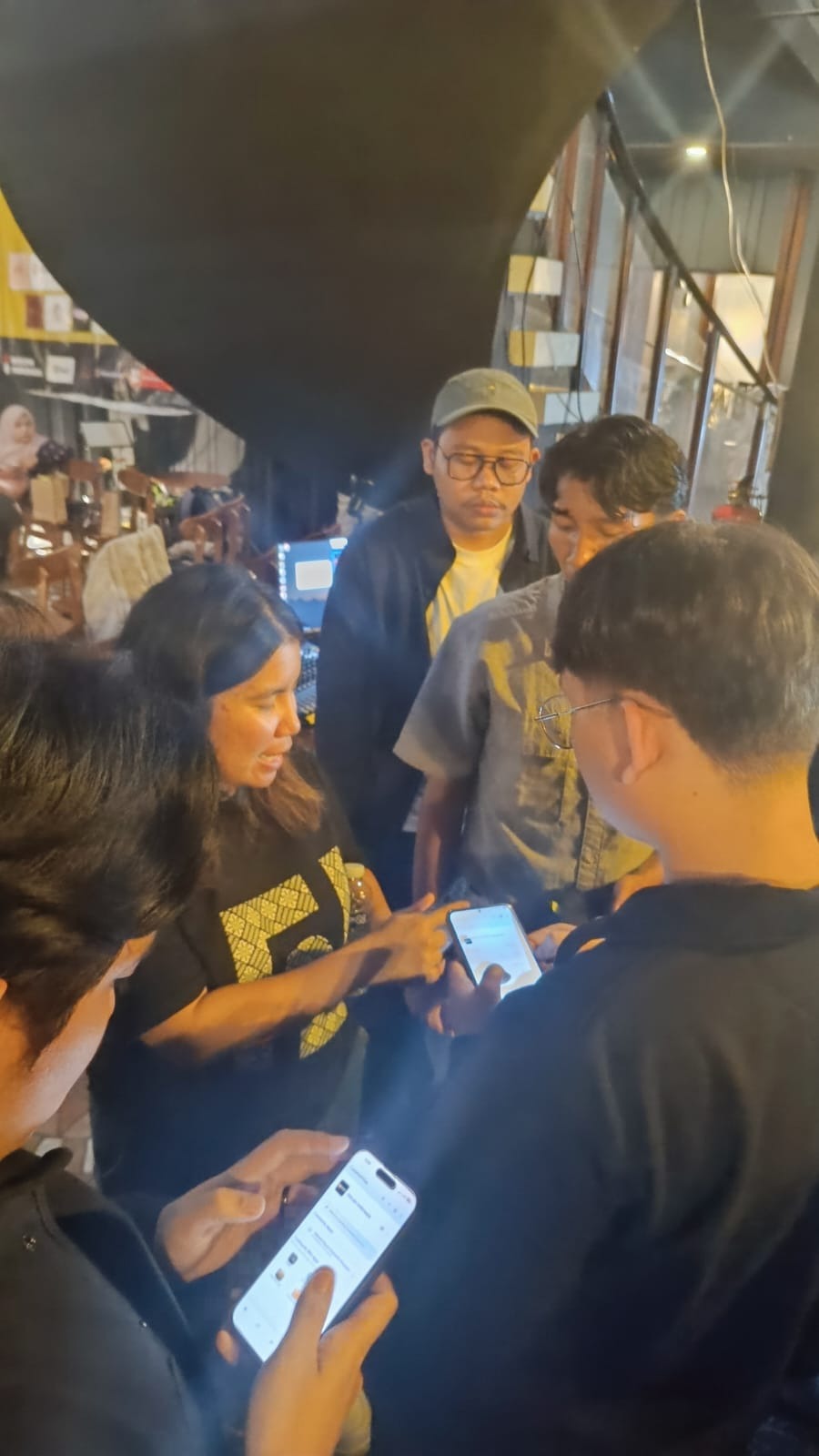
Fedi Southeast Asia Community Master Dea Rezkitha helping people use Fedi at the “Sats-urday Market”
The effort was a success, and Dimas wants to do another 50 events like this across the country within 2026.
But that’s not where his vision ends.
Ultimately, Dimas would like to see this “closed-loop system” expand beyond just customers paying merchants at weekend markets.
His bigger vision is Indonesians paying one another in sats across the supply chain, creating a dynamic in which everything is priced in bitcoin.
“We want to expand our network this year,” said Dimas. “Hopefully, one day soon, we can have, for example, a cafe owner source his beans from another Fedi user and the person farming those beans can source his fertilizer from another Fedi user, so that, in the end, everything is priced in sats.”
While Dimas’ vision may seem lofty, it’s hard to imagine it won’t come to fruition when taking into account all that he and the team at Bitcoin Indonesia have accomplished thus far.
