
September 23, 2026
Custody Compared: Fedimint as The Fourth Way
Ask most Bitcoiners how you should manage your bitcoin, and you'll get one of three answers: you hold your own keys, leave them in the hands of a company, or, increasingly, use some form of “multisig” setup.
Little do some know, there's a fourth option, and it's been running on the Bitcoin main chain for a few years now: community custody, the model behind every Fedimint Federation.
Fedimint splits control of a wallet across a group of trusted people (“Guardians”) instead of concentrating it in the hands of one person or one company.
This article provides an overview of the multiple types of Bitcoin custody and how Fedimint compares.
Self-custody
Self-custody means you personally control the private keys that authorise spending.
No company sits between you and your money. No one can stop you from accessing your bitcoin.
That said, there's often also no one to call when something goes wrong with your key management. This is particularly the case with single-signature wallets.
Single-signature Self-custody
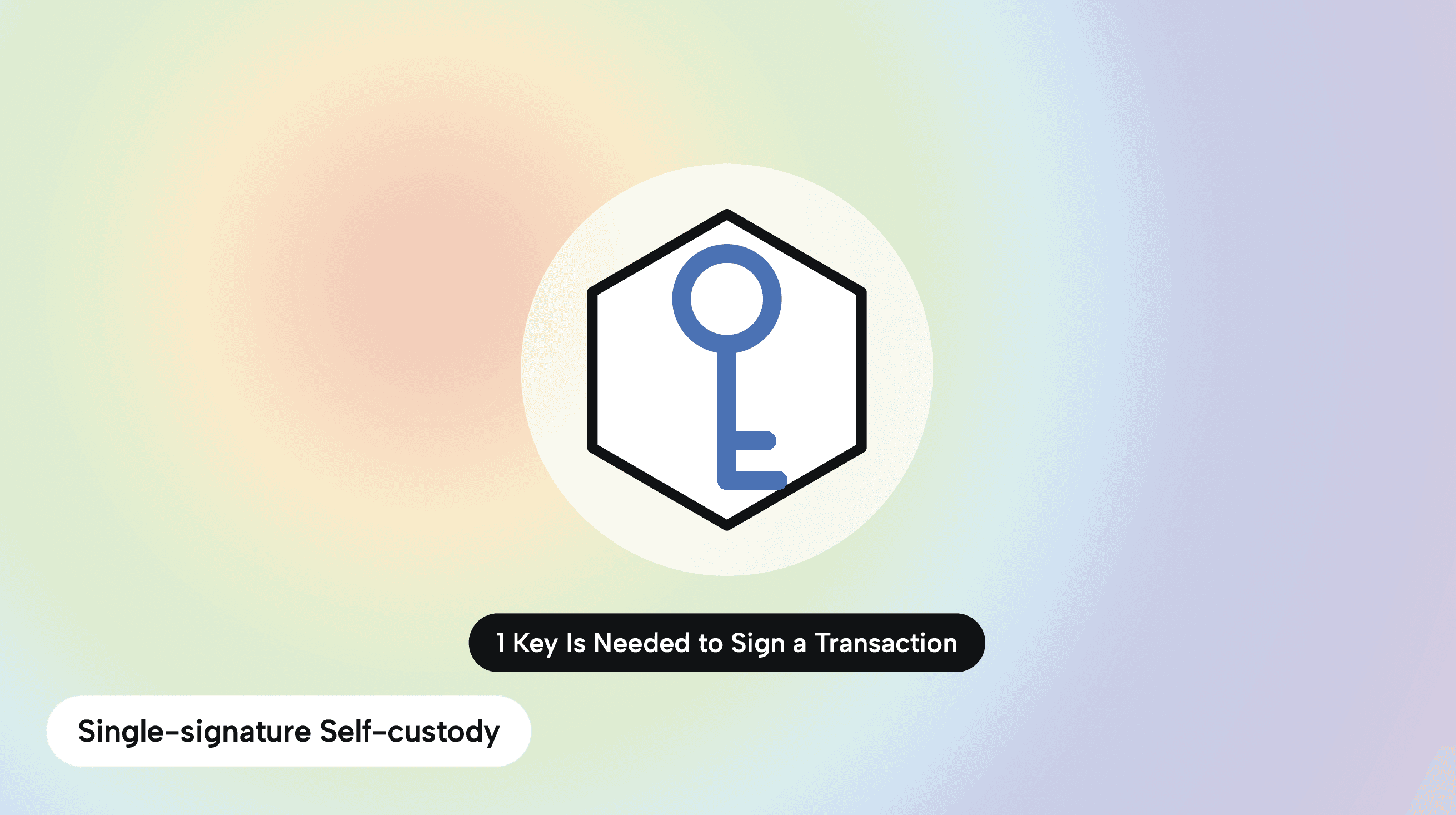
The most common setup is a single-signature wallet: one seed phrase, one key, one signature needed to move funds.
Wallets like Blue Wallet, Sparrow Wallet and Blockstream Green let you create this type of wallet in minutes. Blue Wallet and Green run on your phone, Sparrow on your desktop.
By default, these are "hot" wallets, meaning the private key lives on a device connected to the internet. Convenient for spending, but your key sits on a general-purpose computer or phone that can be infected with malware, stolen, or phished.
Hardware wallets, or "cold" wallets, provide an extra layer of protection. Devices like Trezor, Foundation Passport and Blockstream Jade generate and store your key on a dedicated piece of hardware that never exposes it to the internet. You build a transaction in a companion software app, sign it on the device, then broadcast it. Your key is never exposed to any malware that might exist on your laptop.
Using hardware wallets can come with “supply chain attack” risk. A supply chain attack is a cyberattack in which malicious actors gain access to a third-party provider to obtain information on potential victims.
This can also look like a hacker obtaining customer information (e.g., names, phone numbers, email addresses) so as to then target the customer in a physical or social engineering attack. This recently happened with ShipMonk, one of Trezor’s shipping providers.
Hardware wallets are also only as safe as the quality of their firmware. Malicious actors can exploit bugs in the code, and funds can be drained from wallets as a result, as we recently saw with the Coldcard hardware wallet hack.
Both hot and cold wallets are non-custodial. The difference is where the key sits and what can reach it. Cold or hot, single-sig has the same shape: one secret, held by one person. Lose the seed phrase and the bitcoin is gone. Roughly 20% of all bitcoin is estimated to be permanently lost, much of it to misplaced backups and forgotten PINs. What is more, attacks on bitcoin/crypto holders whose information has been obtained by malicious actors have been on the rise, often leading to a loss of funds.
Multi-signature ("Multisig") Self-custody
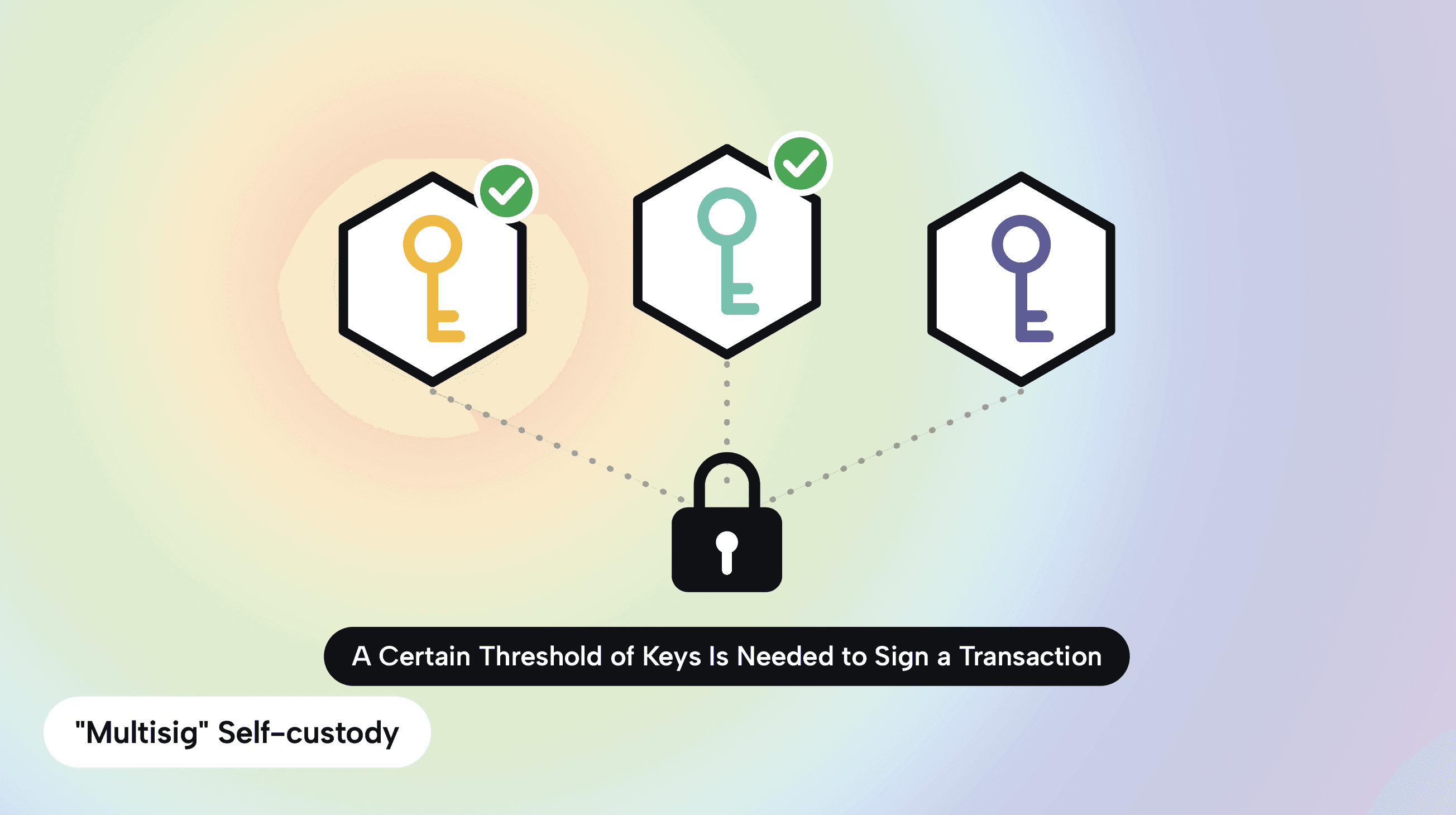
Multisig spreads the risk across several keys. These types of wallets can be created with different signing thresholds.
A 2-of-3 wallet needs two of its three keys to sign before funds move, so losing one key isn't fatal.
You can build one yourself with Nunchuk or Sparrow, pairing two or three hardware devices in the process. You can also use a collaborative custody service like Casa or Unchained, where the provider holds one key and helps you recover if you lose one of yours. However, both of these companies charge a notable fee for their service. Entry-level plans run a few hundred dollars a year, and premium tiers run into the thousands.
BitKey, a 2-of-3 multisig setup that includes a physical device from Block, is perhaps the most user-friendly and one of the most affordable multisig solutions on the market today (Block doesn’t charge a yearly subscription fee for BitKey), though it comes with its own set of trust-related trade-offs.
Users have to trust BitKey’s software to securely create and store their keys, since BitKey devices don’t let users keep a seed phrase. Instead, BitKey provides its own recovery mechanisms, like an Emergency Exit Kit that lets users move their funds independently if Block or the BitKey app becomes unavailable.
Multisig is a real improvement, and it's also more to look after: several devices, several backups, several locations. As The Bitcoin Adviser notes, a badly executed multisig setup can be worse than a simple single-sig one. Even with a service holding a key, you hold the majority of them, so much of the burden still remains on you.
Third-party Custody
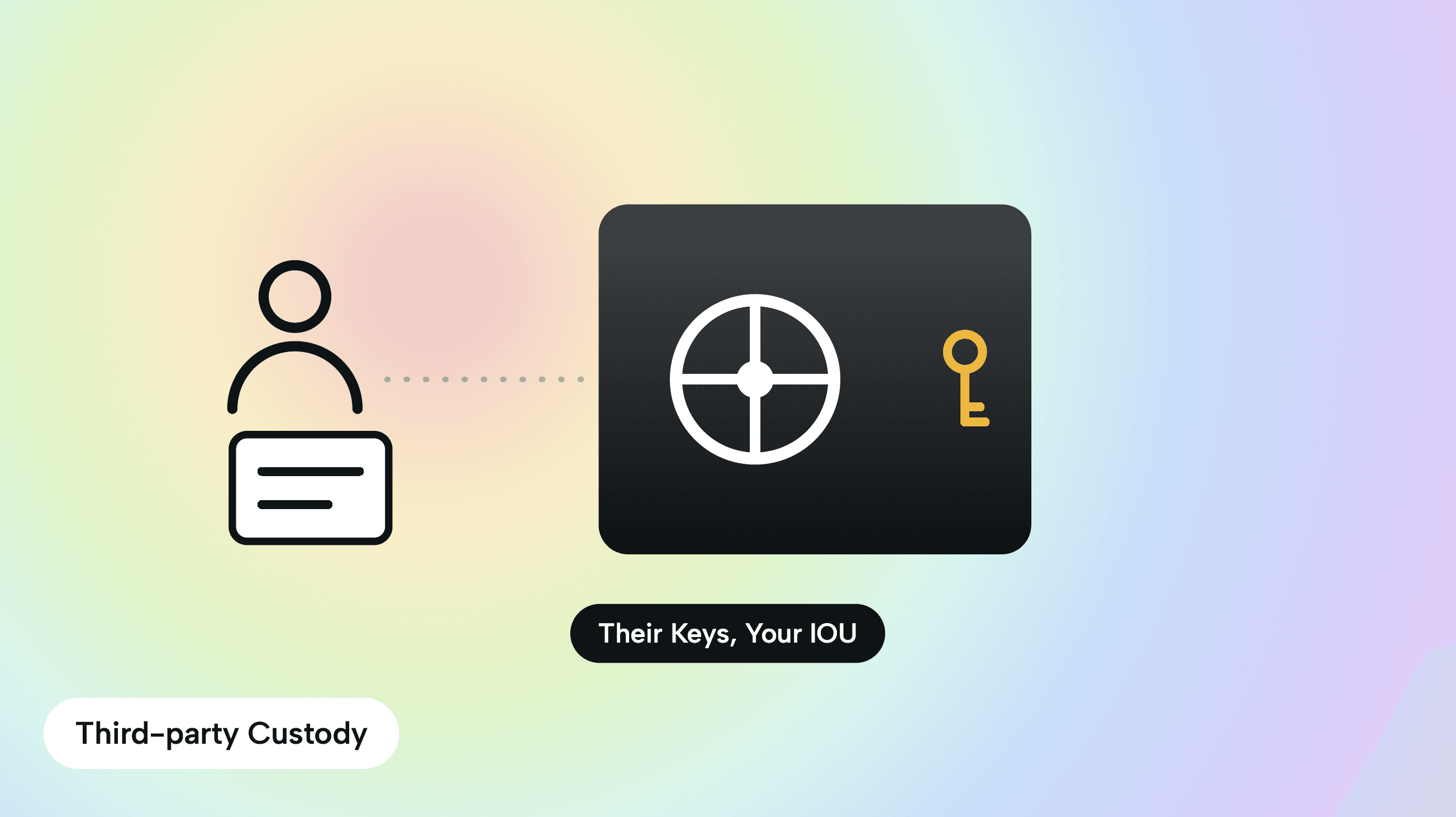
The alternative most people choose is to leave their bitcoin with an exchange or app like River, Bitnob, Strike, or Cash App. The exchange holds the keys. What you hold is a balance on a screen, which is an IOU, a promise to give you bitcoin when you ask.
That promise has broken often enough to fill a history book.
Between 2009 and 2024, digital asset exchanges suffered at least 220 high-impact security incidents with losses above $8.4 billion, according to Frontiers in Blockchain.
Mt. Gox lost 850,000 bitcoin when it was hacked in 2014. It was revealed that FTX didn’t have over $8 billion worth of the digital assets it was supposed to be holding on behalf of its customers when it went under in November 2022.
Hacks and exchange fraud are only two failure modes, though.
There's also the personal data. Opening an account means handing over your name, address and identity documents. In May 2025, bribed support agents at Coinbase leaked customer names, partial SSNs and balances, and the attackers demanded a $20 million ransom. A leak like that turns a customer list into a target list.
Bitcoin lets people hold and transfer money without relying on a single intermediary. With third-party custody, one company controls the keys, creating a single point of failure.
Community Custody (via Fedimint): The Fourth Way
Fedimint is the newest of the four types of custody covered in this piece. Bitcoin developer Eric Sirion released the first prototype, then called MiniMint, in 2021, combining David Chaum's 1983 eCash designs with a Bitcoin multisig wallet.
The result of Sirion’s work is a new, unique form of custody — community custody. And this type of custody is available via Fedi, a company Sirion co-founded with Obi Nwosu in 2022.
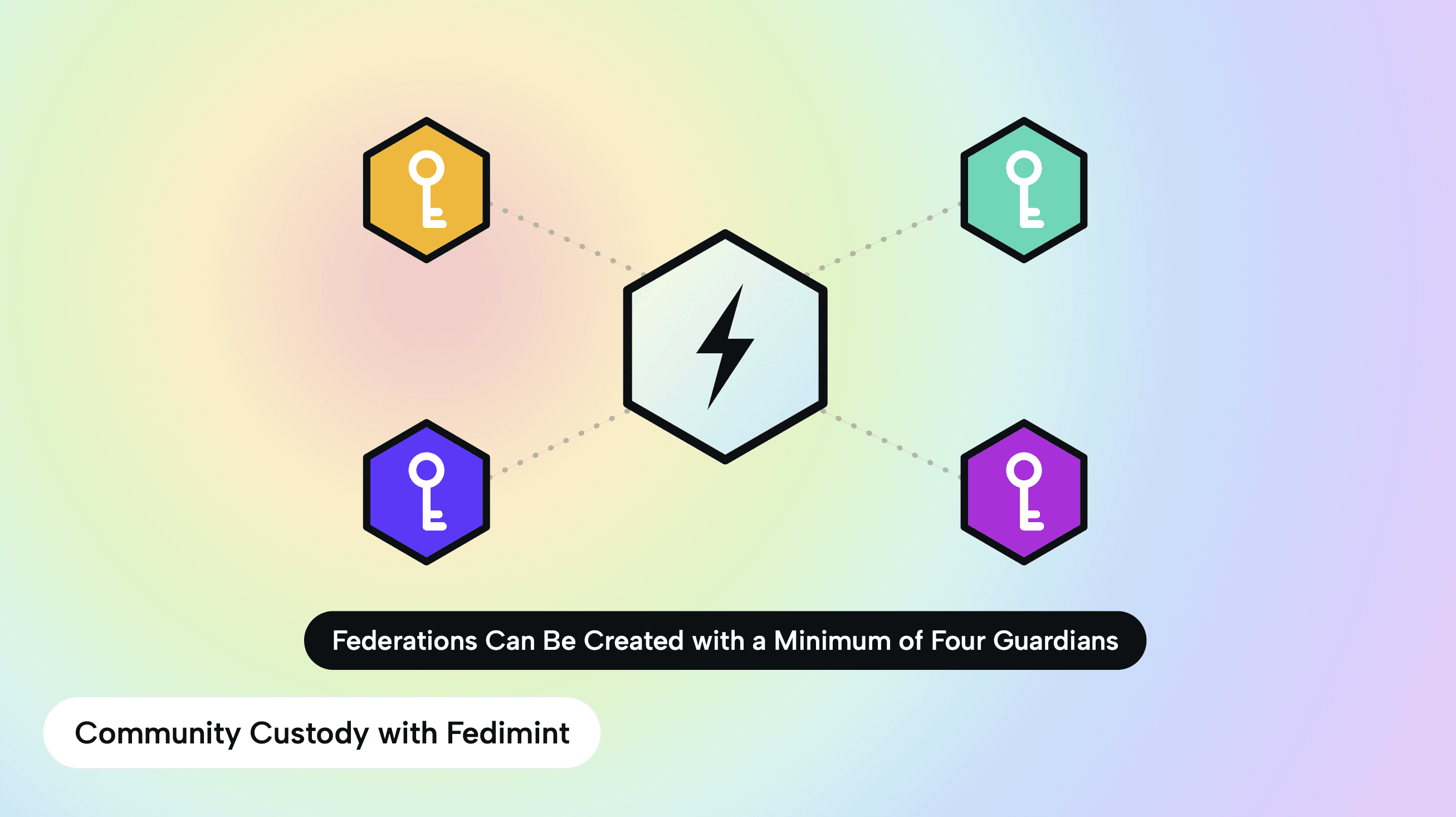
The unit of community custody is a Federation. A Federation forms when at least four trusted people, called Guardians, each run a Fedimint node on a laptop or a home server like an Umbrel or Start9 device. Together they create a multisig bitcoin wallet and an ecash mint simultaneously. Moving funds requires more than two-thirds of the Guardians to agree, so the custody model does not depend on a single Guardian, device, or seed phrase.
And this necessary coordination between guardians is the whole point. In a single-sig wallet, you are the point of failure. With an exchange, the exchange is. In a Federation, the risk is shared by design, and the technical work sits with the Guardians rather than with each user. If you want out, you withdraw on-chain or over Lightning to a wallet of your choosing.
Joining a Federation doesn't require your name, address or ID, so there's nothing to leak later. Payments inside a Federation are made in ecash, so your transactions aren't broadcast to a public ledger or logged against your identity by a custodian. Neither alternative form of custody offers that by default.
Community custody has its own trade-offs, though. You're trusting the Guardians not to collude, not to lose their seed phrases, not to issue more ecash than the Federation holds in bitcoin, and to keep their nodes online. If too many nodes go down, funds freeze until they return.
Distributing keys does not automatically distribute every source of technical risk. If every Guardian relies on the same software implementation, a vulnerability in that implementation could affect the entire Federation. And to be completely transparent, the Fedimint or Fedi app codebases can be single points of failure, which is also true of any Bitcoin-related protocol or software. We recently saw the exploit of the Liquid Network, which led to over $320 million worth of funds being taken from the federation.
This is where implementation diversity becomes an important part of the custody conversation. Multiple independent implementations of the same protocol reduce the risk of every participant inheriting the same software bug.
The teams that work on both Fedimint and Fedi consistently review the codebase of the protocol and app with the help of advanced AI tools to prevent points of failure that could lead to an exploit. We also strongly encourage multiple implementations of any protocol that holds funds.
Which Way Is Best for You?
Every custody question reduces to the same one: who holds the keys?
Hold them yourself, and you get complete control along with complete responsibility. That suits people who are technical, careful, and willing to maintain a setup for decades. Utilise a multisig setup and your funds are perhaps safer, but this still comes with a certain level of responsibility and trust in third parties. Hand them to an exchange, and you get convenience, plus that company's solvency and security risk.
Community custody sits between these three options, and, for many, it's the better fit.
Think of everyone you know who is never going to engrave twelve words on a piece of steel and guard them for life, or those who might not be able to afford a yearly fee for a collaborative multsig wallet. Today, they leave their bitcoin on an exchange or stay away from it entirely. A Federation gives them multisig security and real transactional privacy from day one, with no seed phrase to lose and no company holding their identifying information.
The fourth way — community custody — is for those who are looking to hold their funds in their own custody, just with the help of some trusted people.
